Home How to Extend EV Battery Lifespan for Heavy-duty Vehicle?
Company News
How to Extend EV Battery Lifespan for Heavy-duty Vehicle?
09
22,
2026
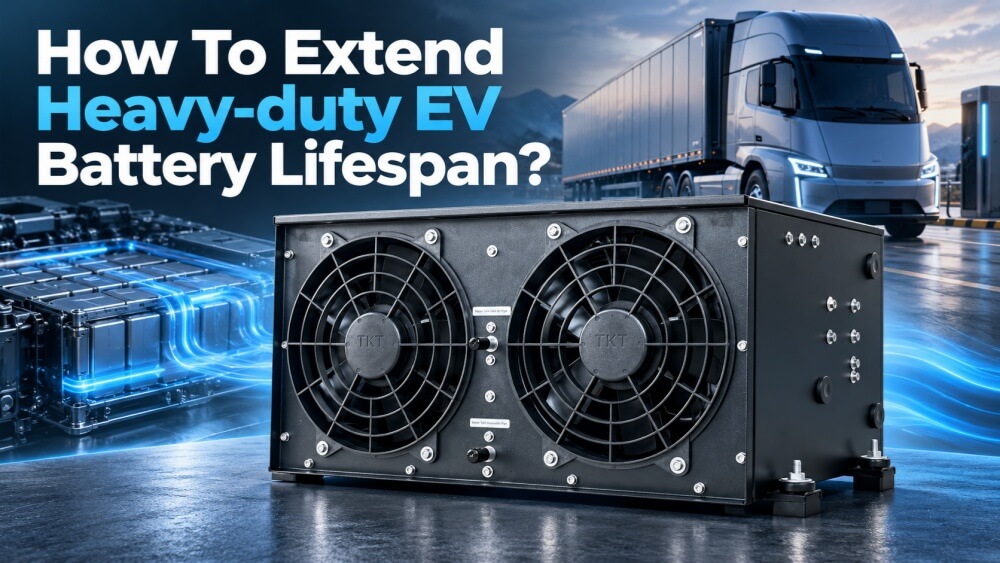
Heavy-duty electric vehicles (EVs) face a more complex battery operating environment, making the question of "how to extend EV battery lifespan" more challenging and crucial than for regular electric vehicles. Optimizing EV battery lifespan typically involves two parts. The first is basic maintenance, including optimizing charging methods, driving habits, and routine upkeep. The second is the underlying core protection: the battery thermal management system (BTMS). BTMS is the most critical device determining battery lifespan. What does BTMS truly address? Controlling temperature and temperature differences. Let me explain the specific reasons in detail.
What are Heavy-Duty Electric Vehicles?
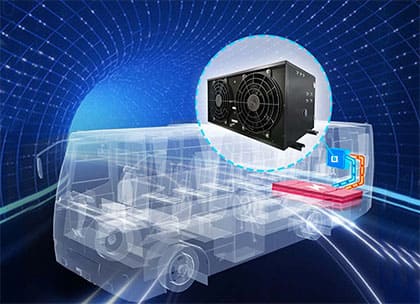
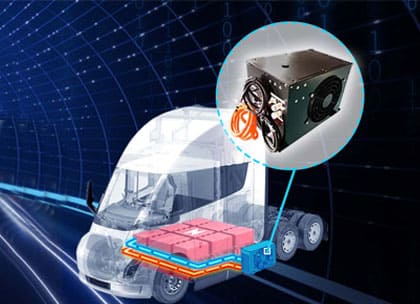
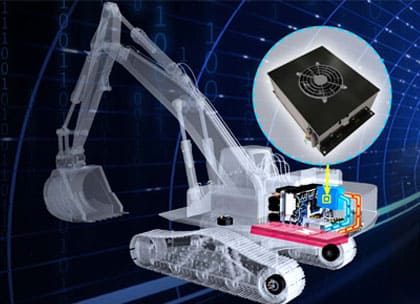
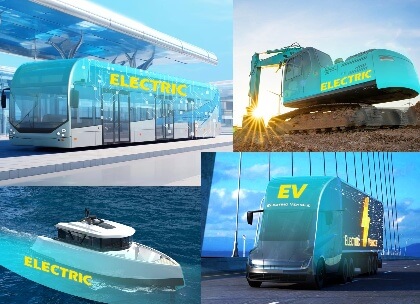
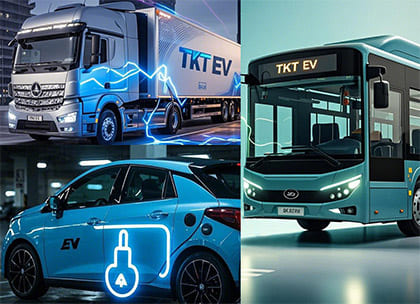
Heavy-duty electric vehicles are typically commercial electric vehicles. Common examples include electric buses, electric heavy trucks, electric light trucks, electric sanitation vehicles, and electric engineering vehicles. These vehicles have high voltage, high power consumption, and high loads.
For heavy-duty electric vehicles, the Battery Thermal Management System (BTMS) is the core system affecting battery lifespan, safety, range, and total cost. This is because the actual operating conditions of heavy-duty electric vehicles are more complex than those of private cars. They typically have higher operating intensity, more frequent charging and discharging, higher power charging and discharging, and more significant load fluctuations. If these conditions are not addressed, the battery will be under high heat load and large temperature fluctuations for extended periods. Even if it doesn't burn out, its lifespan will be reduced exponentially.
Daily charging management, driving habits, and maintenance can reduce some battery life loss, but these measures primarily focus on "how to use the battery." BTMS further addresses the question of "under what temperature conditions the battery operates," which has a greater impact on battery lifespan. For commercial vehicles operating at high frequencies, this level of control often determines whether the battery can maintain stable performance over a long period.
How to Extend EV Battery Lifespan - Conventional Method
Users can reduce battery degradation through reasonable usage and maintenance strategies in commercial operations. Common methods include:
1. SOC Range Management:
Avoid prolonged full-charge storage or deep discharge during daily operation. TKT EV solution® recommends maintaining the battery level between approximately 20% and 80% to reduce losses from prolonged high SOC and deep discharge.
2. Charge/Discharge Current Control:
Reduce unnecessary high-power fast charging. For example, if the vehicle is not in use at night, calculate the charging power based on overnight charging time, rather than using ultra-high-power charging equipment. Secondly, avoid rapid acceleration and deceleration during driving to reduce Joule heat and polarization losses at the source.
3. Regular Maintenance:
If a professional team is available, TKT® recommends regularly checking the voltage balance, insulation, and firmware tightness of the battery cells. Timely detection and optimization of certain cells can prevent premature aging.
4. Environmental Selection:
Choose charging times with relatively suitable temperatures. Otherwise, the combined heat generated during charging at high temperatures can significantly impact battery life and safety. In winter, reducing prolonged battery exposure to low temperatures mitigates the direct impact of extreme temperatures on battery performance and lifespan.
While the above methods share the common goal of "reducing losses," for high-load operational vehicles like heavy-duty electric vehicles, user-side optimization alone is insufficient. With increasing battery capacity, faster charging power, and longer operating times, the battery thermal management system becomes the key factor influencing lifespan.
How to Extend EV Battery Lifespan - BTMS
Lithium-ion batteries are highly sensitive to temperature. Excessive heat accelerates battery aging, leading to issues such as continuous SEI film growth, electrolyte decomposition, loss of active lithium, degradation of electrode material structure, and increased internal resistance.
Low temperatures are equally dangerous. Many people believe, "High temperatures damage batteries; low temperatures only reduce range." This is a serious misconception. Low-temperature charging can accelerate aging due to "lithium deposition." This can cause: irreversible capacity loss, increased internal resistance, reduced fast-charging capability, and uneven aging.
Finally, uneven temperature distribution between cells will drag down the lifespan of the entire battery pack, accelerating aging.
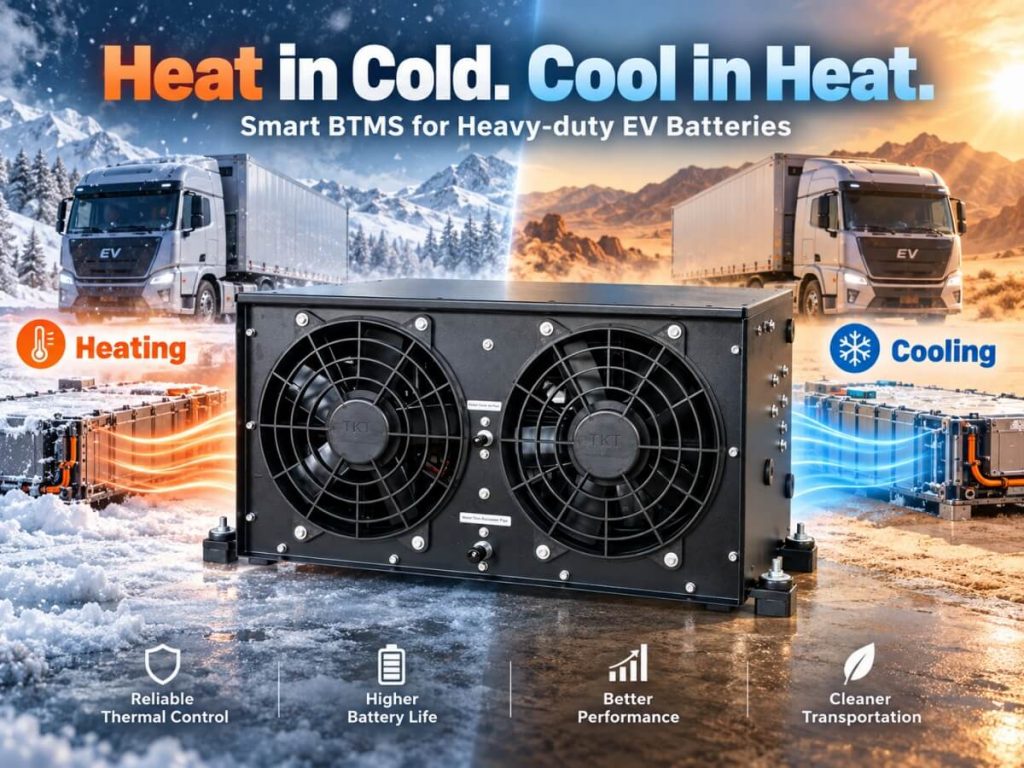
Therefore, BTMS truly solves this not simply by cooling, but by actively cooling, actively heating, and controlling temperature uniformity to keep the battery within its optimal operating temperature range, reducing temperature differences between cells, and extending the lifespan of the entire battery pack.
1. Precise Temperature Control: Maintaining the Battery in a Suitable Operating Environment
The optimal operating range for lithium-ion batteries is approximately 15–40°C. The specific temperature depends on the cell chemistry, rate capability, and manufacturer design. Further details should be confirmed with your battery supplier. The temperature difference between cells is typically controlled within 5°C or even lower.
High-Temperature Environments:
During fast charging, continuous hill climbing, and full-load operation, the battery operates at full capacity, generating significant heat. BTMS uses liquid cooling to dissipate this heat promptly, preventing the battery from remaining at high temperatures for extended periods.
Low-Temperature Environments:
Charging below 0°C carries the risk of lithium plating. Therefore, preheating the battery is necessary before driving or recharging in winter. BTMS uses PTC to heat the coolant, then transfers the heat to the cells, ensuring the battery enters charging or high-power operation at a suitable temperature.
2. Temperature Uniformity Management
For heavy-duty electric vehicle battery packs, the real challenge lies not only in controlling the average temperature but also in controlling the temperature difference between cells. Heavy equipment requires a large number of battery cells in complex locations. If the cooling capacity and cooling path design are not properly optimized, localized hot spots can easily appear. The "weakest link" effect applies to battery packs; the worst-performing cell limits the overall performance of the pack. Cells in high-temperature areas will degrade faster than other cells, becoming the bottleneck in the overall battery pack's performance and ultimately affecting its lifespan.
Therefore, the BTMS (Battery Thermal Management System) must not only control the temperature but also manage the temperature difference between cells.
3. Automated Thermal Management: Automatic Operation Based on BMS Commands
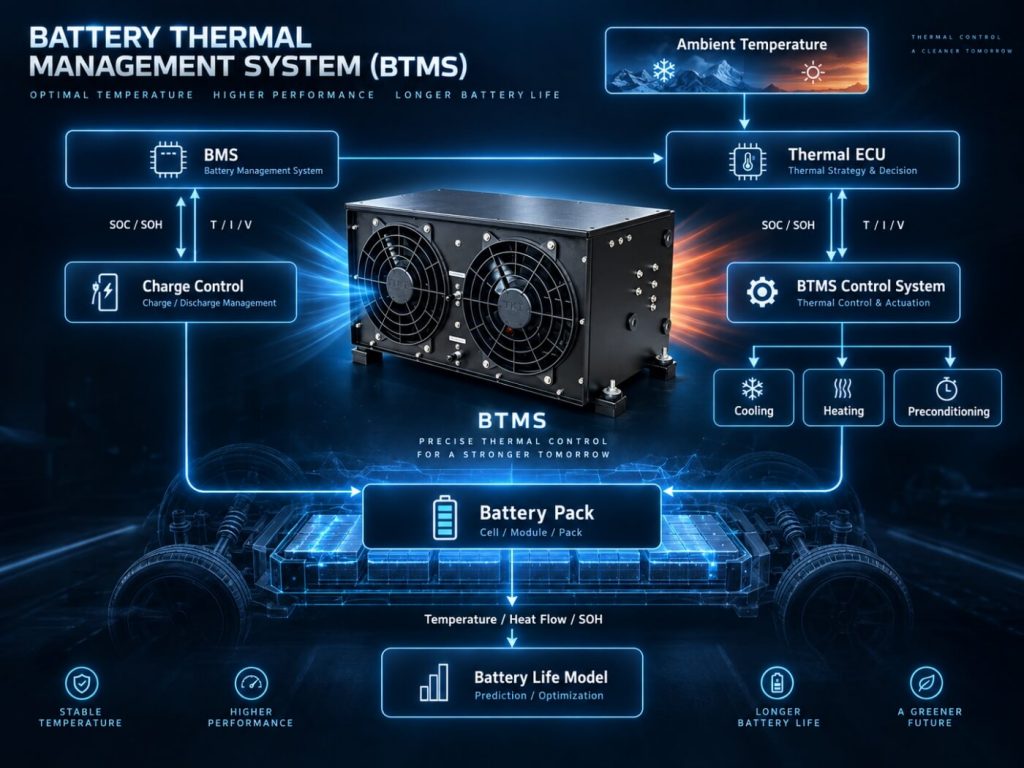
The BMS and BTMS exchange various signals via the CAN bus, including temperature, SOC (State of Charge), operating mode, actuator commands, and fault information. The BTMS centrally feeds back various collected data, such as temperature and coolant flow rate, to the BMS system. Based on the real-time information, the BMS system issues specific commands to the BTMS, such as starting up, increasing cooling efficiency, and PTC heating. Through this information and system integration, automated operation is achieved, reducing human error and realizing automated control of battery thermal management.
4. Safety Backup: Avoiding the Risk of Thermal Runaway
Sustained high temperatures not only accelerate battery life degradation, but more seriously, increase the risk of thermal runaway. Once thermal runaway is detected, the consequences are unimaginable. Therefore, BTMS is also the most important safety feature.
How to Extend EV Battery Lifespan - BTMS Classification
From a system architecture perspective, BTMS can be broadly categorized into two types: passive and active. Neither is inherently superior or inferior. They simply have different advantages and disadvantages depending on the application scenario, requiring careful consideration of heat load and cost requirements.
BTMS Classification
Comparison Dimensions
Air Cooling
Liquid Cooling
Phase Change Material
Working Principle
Utilizes direct airflow over the battery surface, relying on convection to remove heat.
Heat is removed through heat exchange via a liquid coolant (water/glycol, etc.) flowing through a cooling plate.
Utilizes the absorption/release of a large amount of latent heat during the phase change process to suppress battery temperature rise.
Active / Passive
Natural air cooling = passive; fan-cooled air cooling = active.
Active
Passive
Heat Dissipation Efficiency
Relatively low performance. Air's specific heat capacity is only 1/4 that of water, resulting in a low heat transfer coefficient and poor performance under high-rate charging/discharging or high-power conditions.
Very high. Liquids have a much higher thermal conductivity and specific heat capacity than air, resulting in faster heat dissipation and making them the preferred solution for high-power, large-capacity battery packs.
Low to medium temperature, mainly relies on latent heat storage, cannot continuously dissipate heat, and fails after saturation.
Temperature Uniformity
Poor performance. Large temperature differences easily form inside the battery pack, typically reaching 6.1℃, leading to significant localized overheating issues.
Excellent. Temperature can be precisely controlled, with the temperature difference between batteries kept within 2.5℃ to 5℃, significantly better than air cooling.
Good. Can smooth out temperature peaks and suppress local hot spots.
System Complexity
Simple structure, easy design, and easy application and maintenance.
Complex system, requiring the design of components such as water pumps, piping, and compressors.
Relatively compact structure, but volume expansion issues need to be considered.
Applicable Scenarios
Suitable for small electric vehicles, low-heat, small-capacity batteries, and cost-sensitive vehicle models.
Suitable for high-capacity, high-frequency fast-charging scenarios such as electric buses, heavy-duty trucks, and large-scale energy storage.
As part of an auxiliary or hybrid system, used to suppress local overheating and improve temperature uniformity.
Technology Maturity
Very mature and widely used.
Mature and has become the mainstream solution for high-energy-density battery systems.
Under development; great technological potential, but many problems still need to be solved, and large-scale independent application is not yet possible.
The table clearly illustrates why battery liquid cooling has become the mainstream choice for heavy-duty electric vehicles. This is because it provides strong heat exchange capabilities under high-current charging and discharging conditions while maintaining good temperature uniformity between battery cells. Compared to air cooling, liquid cooling is more suitable for the long-term high-load operation of large-capacity battery packs.
How does a battery liquid cooling system work?
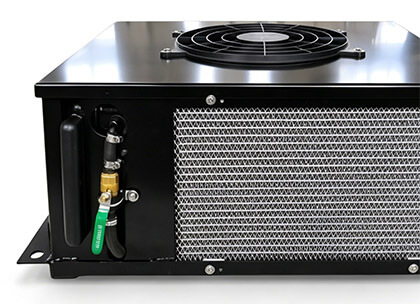
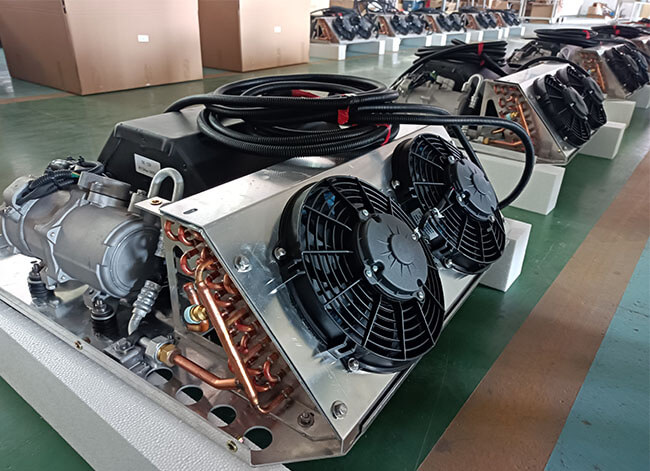
Under high-temperature, fast-charging, hill-climbing, and full-load conditions, the heat generated inside the battery cell is first transferred to the cooling plate through the cell casing and thermal interface, and then carried away by the coolant flowing through the internal channels of the cooling plate. The flow of coolant is facilitated by the operation of a water pump. The heated coolant flows out of the battery pack and is then cooled through a compressor refrigeration cycle in the BTMS (Battery Thermal Management System). The cooled coolant then returns to the cooling plate, repeatedly completing the heat exchange. The compressor refrigeration cycle then dissipates the heat outside the vehicle, completing a full cycle.
This design is specifically designed for heavy-duty electric vehicles because of their complex operating environment, including long-term vibration, dust, and temperature differences. The coolant does not directly contact the battery cells, but exchanges heat through heat exchangers such as the cooling plate, which is most beneficial for the long-term reliability of the system.
BTMS is not "the more powerful, the better."
While it's possible to design an extremely powerful BTMS cooling system, and this would indeed improve battery temperature control. It introduces a serious problem, particularly important for heavy-duty commercial vehicles: a significant increase in overall power consumption. This includes increased power consumption from the water pump and compressor, as well as increased system weight. All this energy ultimately comes from the vehicle's battery. Therefore, the BTMS cooling capacity only needs to be adapted to the actual needs of the battery. Excessive cooling capacity can lead to unnecessary energy consumption, reducing the vehicle's actual transport capacity and driving range.
What we should do is find a balance between battery lifespan, charging efficiency, overall vehicle energy consumption, and safety.
The True Value of BTMS: More Than Just Cooling, It Reduces Total Lifecycle Costs
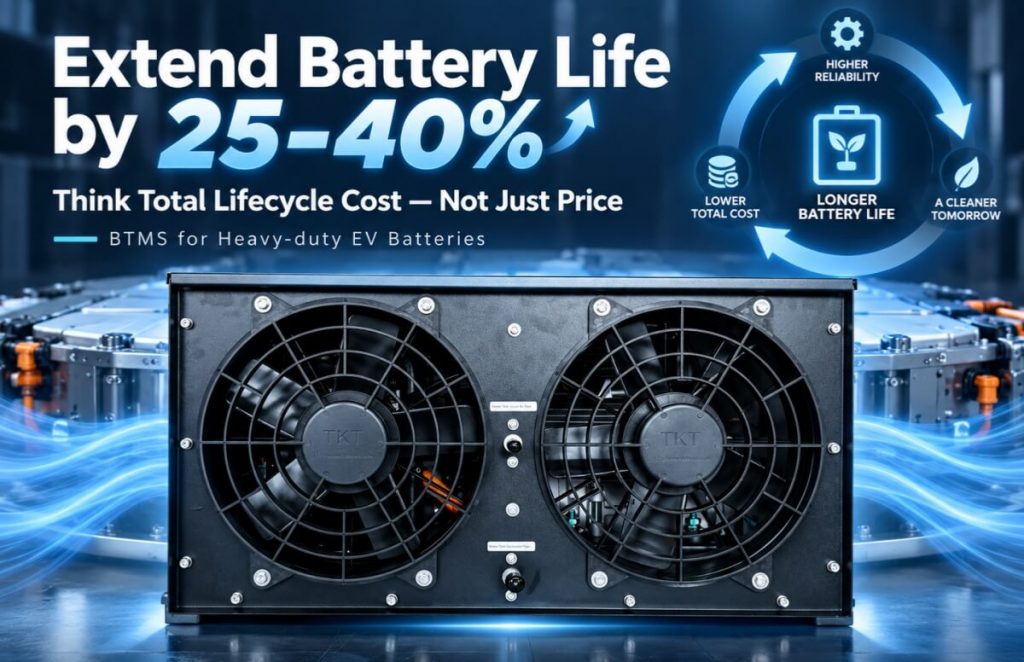
The direct benefit of a battery thermal management system (BTMS) in heavy-duty EVs is stable battery temperatures. Its greater value lies in how to extend EV battery lifespan, maintain vehicle availability, and reduce operating costs. In regions with significant annual temperature variations, efficient BTMS can extend battery cycle life by approximately 25% to 40% compared to vehicles without active temperature control. For heavy-duty electric vehicles, batteries account for a high proportion of the total vehicle cost, and these vehicles typically operate at high frequencies. Therefore, any technology that can slow battery degradation can have a multiplier effect throughout its lifecycle.
Therefore, when assessing the total cost of ownership (TCO) of commercial electric vehicles, the value of BTMS cannot be judged solely by the purchase cost per vehicle. It must be comprehensively considered in conjunction with battery life, maintenance costs, and vehicle downtime risks.
Conclusion
After reading this article, I believe you already know the answer to "how to extend EV battery lifespan". In summary, For heavy-duty electric vehicles, daily usage habits and maintenance constitute the foundation of battery life management, while BTMS (Battery Thermal Management System) is the decisive factor in battery life. It determines the underlying guarantee that the battery can operate stably for a long time under high-load environments.
From a technical perspective, battery liquid cooling systems have become the mainstream solution for large commercial electric vehicles. It allows the battery to remain usable and stable over a longer lifespan, thereby reducing the overall life-cycle operating costs of the vehicle.
TKT® is an experienced manufacturer of BTMS (Battery Thermal Management Systems). We have developed customized BTMS solutions for electric buses and electric trucks for two Fortune Global 500 companies. Please feel free to contact us if you have any requirements.
FAQs
Q: What is a BMS?
A: A BMS stands for Battery Management System. It's the core brain of a battery system, responsible for monitoring and controlling the battery. It collects data such as voltage, current, temperature, SOC, and SOH from other related devices, and issues various communication commands in real time, such as charging/discharging and power limiting, to ensure stable operation and safety.
Q: What is the relationship between a BMS and a BTMS?
A: A BMS manages the battery state, while a BTMS manages the battery temperature. They typically communicate via CAN: the BMS provides specific commands to the BTMS, and the BTMS uses this information to control the water pump, compressor, heater, etc., to maintain the battery within a suitable temperature and temperature range. In other words, the BMS focuses on "monitoring, judgment, and protection," while the BTMS focuses on "execution."
Q: What is the typical coolant used in a battery liquid cooling system?
A: A dedicated water-glycol mixture coolant is typically used. It balances thermal conductivity, antifreeze performance, and material compatibility.
Q: How do I assess what size BTMS I need?
A: Cooling capacity cannot be determined solely based on battery capacity (kWh); it should be assessed based on the actual maximum heat load. Key factors to consider include the battery's maximum charge/discharge current, charge/discharge rate, internal resistance, fast charging power, and ambient temperature. This data can be discussed with your battery supplier. They are professionals and generally have a suitable calculation method for these peak heat generation parameters.
Q: Will the BTMS activate during charging?
A: Absolutely, especially important under high-power charging conditions. Batteries are bidirectional; both charging and discharging generate significant heat. Therefore, the BTMS is a crucial component of charging thermal management.