Home The Lowest Price Bus Air Conditioner Often Has the Highest Cost
Company News
The Lowest Price Bus Air Conditioner Often Has the Highest Cost
09
28,
2026
In overseas bus passenger transport operations, the stability of the bus air conditioner system is a key factor affecting vehicle online operation rate and revenue. Many operators often prioritize initial purchase price when procuring bus air conditioner systems, neglecting the long-term hidden costs associated with quality. These include revenue losses due to downtime caused by malfunctions, frequent after-sales maintenance expenses, and the cost of premature replacement of core components. These accumulated costs often far exceed the initial savings on procurement costs. As a bus air conditioning manufacturer focused on overseas markets, TKT always prioritizes quality. This can minimize the probability of after-sales problems for our customers. This is a win-win situation for both our customers and our brand. This article primarily discusses the expansion valve, a core component of bus air conditioning systems. This is done to help you understand its lifecycle value.
What are the main components of a bus air conditioning system?
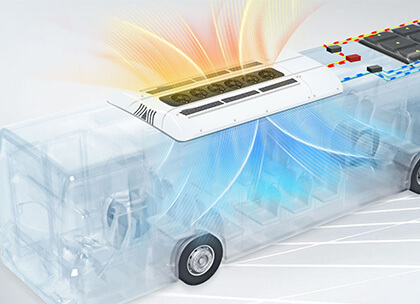
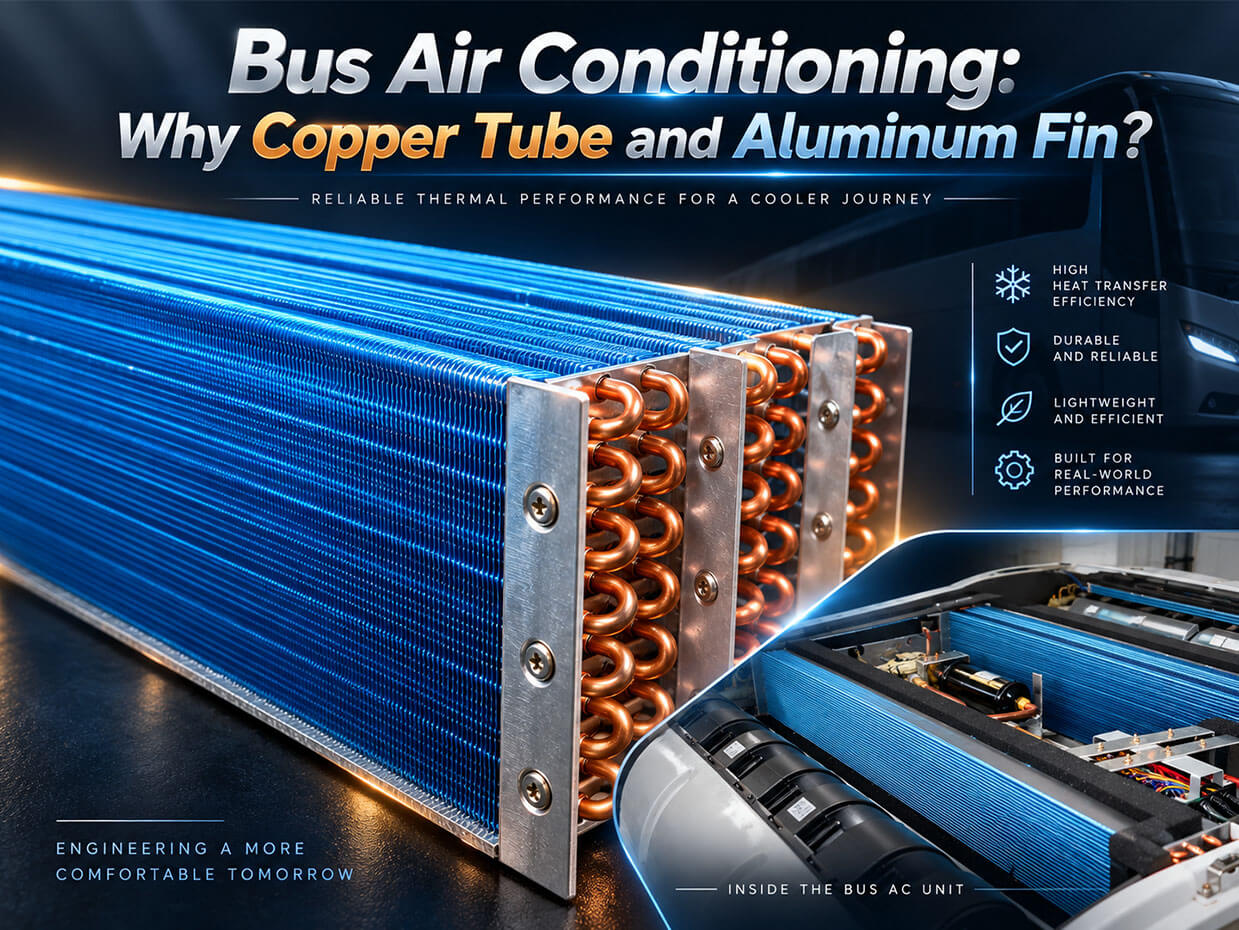
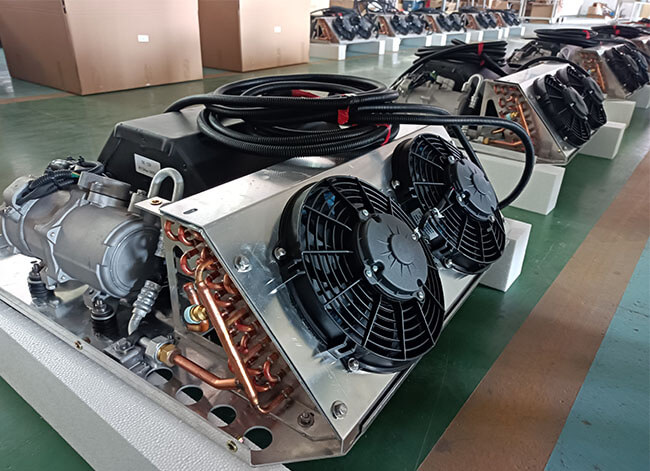
A roof-mounted bus air conditioning system is essentially a compact refrigeration unit. That needs to withstand vehicle vibration, dust, and drastic temperature changes, and operate continuously for 12-18 hours a day. A complete bus air conditioning system typically includes:
1. Compressor
The compressor is the power core of the refrigeration system. It is responsible for compressing and delivering the refrigerant, ensuring its continuous circulation throughout the system.
2. Condenser
The condenser is where the high-temperature, high-pressure refrigerant enters and exchanges heat with the outside air, releasing heat and completing the condensation process.
3. Expansion Valve
The expansion valve controls the refrigerant flow into the evaporator and reduces pressure, making it a crucial flow control component in the refrigeration system.
4. Evaporator
The evaporator absorbs heat from the air inside the bus compartment, thus cooling the passenger area.
5. Auxiliary components
Such as the receiver-drier and filter dryer. These components filter impurities and absorb moisture from the system.
6. Fan System
Responsible for air circulation within the bus and airflow to the condenser and evaporator sides, accelerating the heat exchange process.
7. Sensor and Control System
Provides real-time control of the air conditioning system by monitoring temperature, pressure, and system operating status.
These components do not operate independently; therefore, each part is critical. Among these components, the expansion valve, though small in size, is one of the most critical control elements in the refrigeration system. It connects the high-pressure and low-pressure sides, determining the accuracy of refrigerant flow, evaporator efficiency, and compressor safety.
What is a bus air conditioner expansion valve? Why is it so important?
The thermostatic expansion valve is one of the four core components of a bus air conditioner refrigeration system. It is installed between the condenser outlet and the evaporator inlet. It is a crucial node connecting the high-pressure and low-pressure sides of the refrigeration system.
Its three main functions are:
First, throttling and pressure reduction.
It throttles and reduces the pressure of the high-pressure liquid refrigerant output from the condenser, converting it into a low-temperature, low-pressure mist-like refrigerant, allowing it to evaporate and absorb heat in the evaporator, achieving a cooling effect.
Second, flow regulation.
Based on changes in the refrigerant temperature at the evaporator outlet, it adjusts the refrigerant flow rate into the evaporator in real time to match fluctuations in the passenger compartment's heat load.
Third, maintaining superheat.
It maintains a reasonable superheat at the evaporator outlet, ensuring sufficient refrigerant evaporation for maximum cooling efficiency while preventing liquid refrigerant backflow into the compressor, which could cause "liquid slugging" damage and protect the compressor's safe operation.
Compared to ordinary stationary air conditioner systems, bus air conditioner systems face more complex environments, such as prolonged continuous operation, high-temperature exposure, continuous vehicle vibration, dust and complex road conditions, frequent door opening and closing, and constantly changing passenger numbers. All of the above situations place strict requirements on the adjustment accuracy, durability, and environmental adaptability of the expansion valve. Its quality directly determines the cooling stability of the air conditioning system, the lifespan of the compressor, and the probability of overall system failure, making it a core component ensuring the continuous online operation of the bus.
Function of the Expansion Valve in Bus Air Conditioner
Bus air conditioner systems commonly use thermostatic expansion valves, which are primarily composed of a valve core, valve seat, spring, and temperature sensing bulb. The core function of the expansion valve is to sense the superheat at the evaporator outlet and automatically adjust the valve opening.
When the heat load inside the bus increases, such as due to more passengers, frequent door opening and closing, or high outside temperatures, the refrigerant temperature at the evaporator outlet rises. The temperature sensing bulb drives the valve core to open wider, increasing the refrigerant supply and improving cooling capacity. When the heat load decreases, the valve core closes accordingly, reducing refrigerant flow and preventing incomplete refrigerant evaporation that could lead to compressor liquid slugging.
High-quality expansion valves can maintain precise and stable regulation over a wide temperature range and in scenarios with rapid load changes. Inferior expansion valves often suffer from problems such as lag in regulation, large superheat deviations, and easy jamming, resulting not only in poor cooling performance but also significantly increasing the risk of compressor damage.
Why did TKT choose Sanhua Group's expansion valves?
Founded in 1984, Sanhua Group is the world's largest manufacturer of refrigeration and air conditioning control components and automotive thermal management system control components.
Global Market Leadership:
According to Frost & Sullivan data, in 2024, Sanhua's global market share for refrigeration and air conditioning control components was approximately 45.5%.
Number One Global Market Share in Nine Product Categories: Electronic expansion valves (approximately 51.4%), four-way reversing valves (approximately 55.4%), solenoid valves, microchannel heat exchangers, service valves, Omega pumps, ball valves, automotive electronic expansion valves (approximately 48.3%), and new energy vehicle thermal management integrated modules (approximately 65.6%).
Global R&D and Manufacturing Layout:
With eight production bases worldwide, covering countries such as China, Mexico, Poland, Vietnam, and Thailand, a global supply network has been established. Three overseas R&D centers employ over 3,500 R&D personnel, with R&D investment accounting for 7%-8% of operating revenue. A total of 4,680 domestic and international authorized patents have been obtained. It maintains a leading technological position in the industry.
Extensive Global Validation in the Commercial Vehicle Sector:
In the commercial vehicle sector, Sanhua has partnered with major domestic bus manufacturers such as Yutong, King Long, Golden Dragon, and Ankai. It is a long-term supplier to international commercial vehicle giants such as Mercedes-Benz, Volvo, and Toyota. It is also a core partner for thermal management systems in Tesla and BYD's new energy commercial vehicles. Its products have undergone real-world testing on tens of millions of vehicles globally, demonstrating their reliability and gaining widespread market recognition.
Sanhua RFGD Series Thermal Expansion Valves
The RFGD series is a product specifically developed by Sanhua Group for the demanding operating conditions of bus air conditioning systems. This series boasts over seven core patented technologies. Its structural design and performance are fully adapted to the rigorous operating scenarios of commercial vehicles.
Large Diameter, Large Capacity: 9 orifice sizes covering a wide range of cooling capacities;
Wide Temperature Range Operation: Ambient temperature -35℃ to +55℃;
High Pressure Resistance: Maximum operating pressure 4.8MPa, high pressure margin;
Long-Life Continuous Operation: Dual diaphragm structure, suitable for 12-18 hours of continuous operation per day;
Resistant to Dirt and Clogs, Vibration and Noise Reduction: Optimized for dusty, vibrating, and abrasive environments;
Multi-Refrigerant Compatibility: Suitable for common HCFC/HFC refrigerants such as R22, R134a, R404A, R407C, R410A, and R507;
Heat Pump Compatibility: Balanced flow port design suitable for reversible circulation, consistent cooling and heating flow characteristics.
Core patented technologies include:
1. Dual-diaphragm structure patent:
Designed for the pressure scenarios of long-term continuous operation of bus air conditioning. A dual-diaphragm design improves pressure shock resistance by over 40%. Laser welding technology ensures a significantly higher sealing performance than traditional methods, greatly reducing after-sales leakage.
2. Temperature sensing bulb cross-charging patent:
Solves the problem of large superheat deviation in traditional expansion valves under extreme high and low temperature environments. Maintains precise flow regulation over a wide temperature range of -35℃ to 55℃, ensuring stable cabin temperature and smoother compressor operation.
3. MOP maximum working pressure protection patent:
Automatically limits refrigerant flow when the evaporation pressure exceeds a set threshold, preventing compressor overload during startup after high-temperature exposure and significantly reducing the risk of compressor burnout.
4. Balanced flow port design patent:
Supports reversible cooling/heating cycles. Flow characteristics are consistent with cooling mode in heat pump mode, with no performance degradation.
5. Wide-range ball valve core patent:
Upgrading the traditional conical valve core to a ball valve core, changing from linear conical surface adjustment to rotary curved surface adjustment. It adapts to frequent door opening and closing and large heat load fluctuations in buses.
6. Overheat detection patent technology:
Calculating overheat through the difference between the bypass channel and the temperature sensor, eliminating the need for an additional pressure sensor, reducing system costs while improving reliability; it also enables system fault self-diagnosis, significantly shortening vehicle downtime for maintenance.
7. Other reliability patents:
Vibration reduction and noise reduction, wear prevention, improved airtightness, etc.
These designs are not merely "parameter stacking," but directly address the most common after-sales pain points of bus air conditioning: leakage, vibration fatigue, dirt blockage, compressor protection, heat pump degradation, and instability in extreme weather.
Choosing Bus Air Conditioners: Total Life Cycle Value is Far More Important than Low Price
TCO
For overseas bus operators, evaluating the value of bus air conditioners should not only focus on the initial purchase price, but also on the total life cycle cost. TCO is the sum of all relevant costs throughout the entire usage cycle from purchase to scrapping, including initial purchase cost, daily operation and maintenance cost, fault repair cost, component replacement cost, and the often overlooked "downtime loss cost."
Low-priced bus air conditioners often use low-cost, low-quality products for core components such as expansion valves. While the purchase cost is lower in the short term, many problems will emerge in long-term use.
1. Poor adjustment precision leads to poor cooling effect and increased energy consumption;
2. Poor sealing and structural reliability leads to refrigerant leakage and frequent malfunctions;
3. Short lifespan of core components leads to premature replacement.
4. More seriously, frequent vehicle downtime due to air conditioning malfunctions directly reduces operating frequency and ticket revenue. For passenger transport and public transport businesses that rely on operating hours for profitability, the revenue loss from downtime often far exceeds the purchase price of the air conditioner itself.
For buses exported overseas, after-sales issues are often more complex. Vehicles may operate thousands or even tens of thousands of kilometers away from their manufacturers. A failure in a critical component could involve: international shipping of parts, overseas technical support, local repair personnel, fault diagnosis, vehicle downtime, and spare parts inventory management.
While bus air conditioning systems equipped with three-flower expansion valves have a slightly higher initial procurement cost, their high reliability of core components brings multiple long-term benefits to customers. Overall, their total lifecycle cost is far lower than that of lower-priced air conditioners, making them a more cost-effective long-term choice for overseas operators.
Summary
Bus air conditioner systems are long-life equipment, not ordinary fast-moving consumer goods. Considering downtime, maintenance, and lost revenue, the lowest quote often results in the highest final cost. As a bus air conditioning manufacturer deeply rooted in overseas markets, TKT firmly believes that quality is the core competitiveness for success in the global market.
We insist on using the world's leading, high-quality, and patented Sanhua expansion valve, developed specifically for the demanding operating conditions of buses, to create bus air conditioning systems that offer stable cooling, high reliability, and continuous revenue generation. This is a responsibility to our customers' operational value. If purchasing decision-makers understand the entire lifecycle, the entire fleet will benefit. Contact us; TKT will tailor a suitable air conditioning system solution for you based on your operating region's climate, routes, and refrigerant type.
FAQs
Q: What is the total lifecycle cost of a bus air conditioning system?
A: Total Cost of Ownership = Initial Purchase Price + Energy Costs + Routine Maintenance + Spare Parts Costs + Emergency Repairs + Downtime Losses
Q: Which brand of compressors do you use?
A: TKT currently mainly uses Bock, Valeo, and Haili, among others. Specific models need to be confirmed individually.
Q: What other measures have you taken regarding quality?