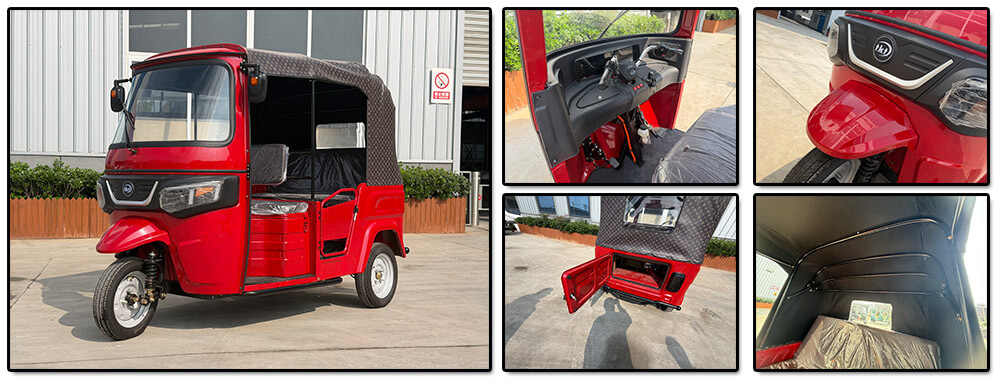
As countries around the world increasingly prioritize environmental protection and sustainable development, electric three wheeler rickshaws have become the best choice for short-distance commuting in cities and rural areas. Electric three wheeler rickshaw combine environmental friendliness, economy, and convenience, fundamentally changing people's perceptions of short-distance travel.
What is an electric three wheeler rickshaw?
An electric three wheeler rickshaw, often simply called an electric rickshaw, is a battery-powered vehicle primarily used for short-distance commuting. Unlike traditional rickshaws that rely on human pedaling or fuel, electric rickshaws use batteries to power an electric motor. It is a green and environmentally friendly choice, reducing carbon emissions from traditional fuel-powered vehicles.
Advantage 1: Environmental Friendliness
One of the most significant advantages of the electric three wheeler rickshaw is its minimal environmental impact. With zero exhaust emissions, they help purify the air and contribute to combating urban pollution. As the global greenhouse effect intensifies, more and more cities are paying increasing attention to this issue.
Advantage 2: Low Costs
Electric rickshaws not only have low purchase costs but also low maintenance costs. Electricity costs are also far lower than gasoline or diesel, thus significantly reducing operating costs. Furthermore, with fewer mechanical parts, maintenance costs are correspondingly reduced. In the long run, this can save operators and owners a significant amount of money.
Advantage 3: Ease of Use
The electric three wheeler rickshaw has a low learning curve and can be quickly mastered. They typically employ user-friendly controls, allowing drivers of all skill levels to easily operate them. Additionally, their compact size and maneuverability allow them to easily navigate congested streets. This significantly improves driving efficiency and provides efficient transportation in busy urban areas.
The Contribution of Electric Three Wheeler Rickshaw
Electric rickshaws are driving a transportation transformation, making it more inclusive and enriching solutions for different scenarios. They provide a cost-effective solution for "last 10 kilometers" travel, bridging the gap between public transportation systems and final destinations. Moreover, the rise of electric rickshaws has driven employment growth across various sectors, from manufacturing to service and repair. This not only promotes economic development but also provides job opportunities.
TKT Electric Three Wheeler Rickshaw
The Challenges of Electric Rickshaw
Despite the numerous advantages of electric rickshaws, they also face some challenges. The most prominent challenge is the need to build a comprehensive charging infrastructure. The widespread adoption of electric rickshaws will be hindered if charging stations are not widely available.
Summarize
In conclusion, the electric three wheeler rickshaw is the best option for short-distance sustainable transportation. With technological advancements and improved infrastructure, these rickshaws are expected to become an important part of urban and rural transportation networks, paving the way for a cleaner and greener future of transportation.