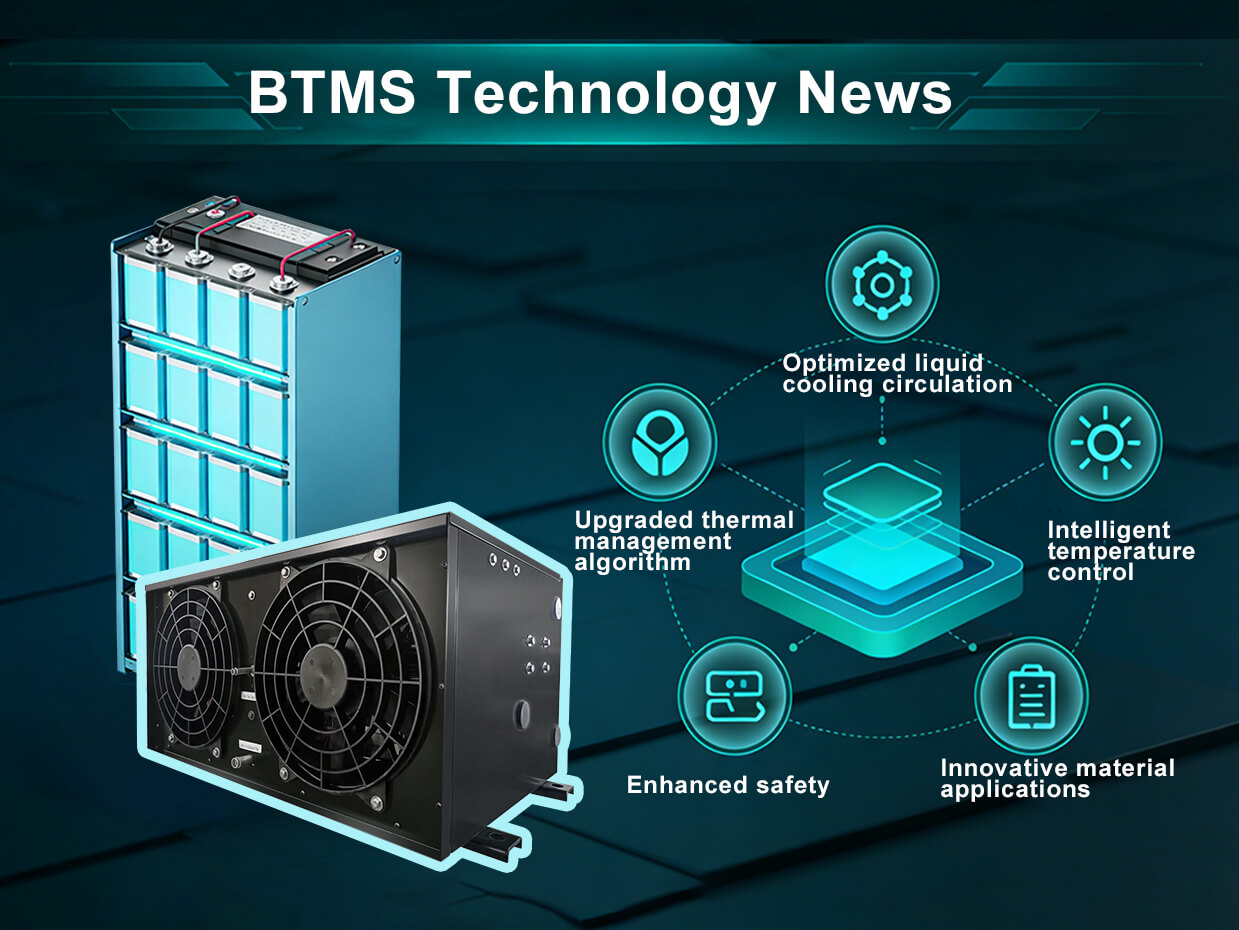
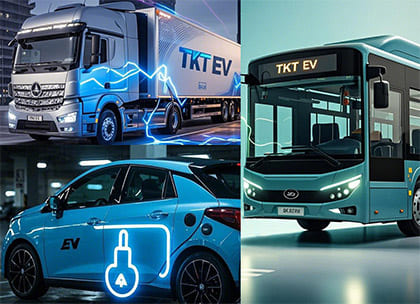
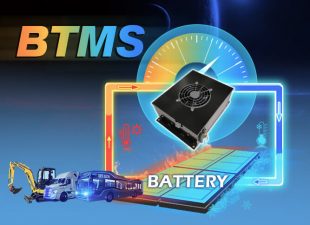
With the accelerating electrification of commercial vehicles globally, battery liquid cooling has become a core technology of modern battery thermal management systems (BTMS). It effectively addresses key pain points in electric vehicle (EV) batteries, such as overheating, uneven temperature distribution, and short battery life. TKT, with over 12 years of experience in vehicle thermal management, understands that maintaining optimal temperature is crucial to fully realizing the potential of lithium-ion battery packs. This article will comprehensively explain the core concepts, working principles, advantages, and applications of battery liquid cooling, and share TKT's successful case studies in this field.
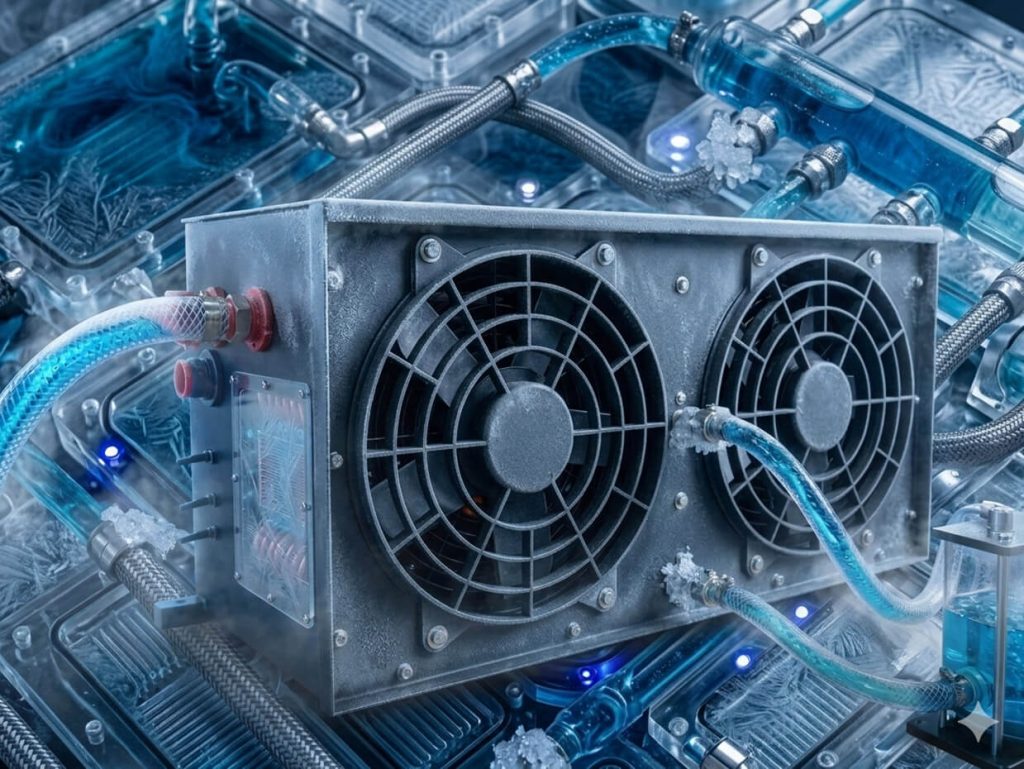
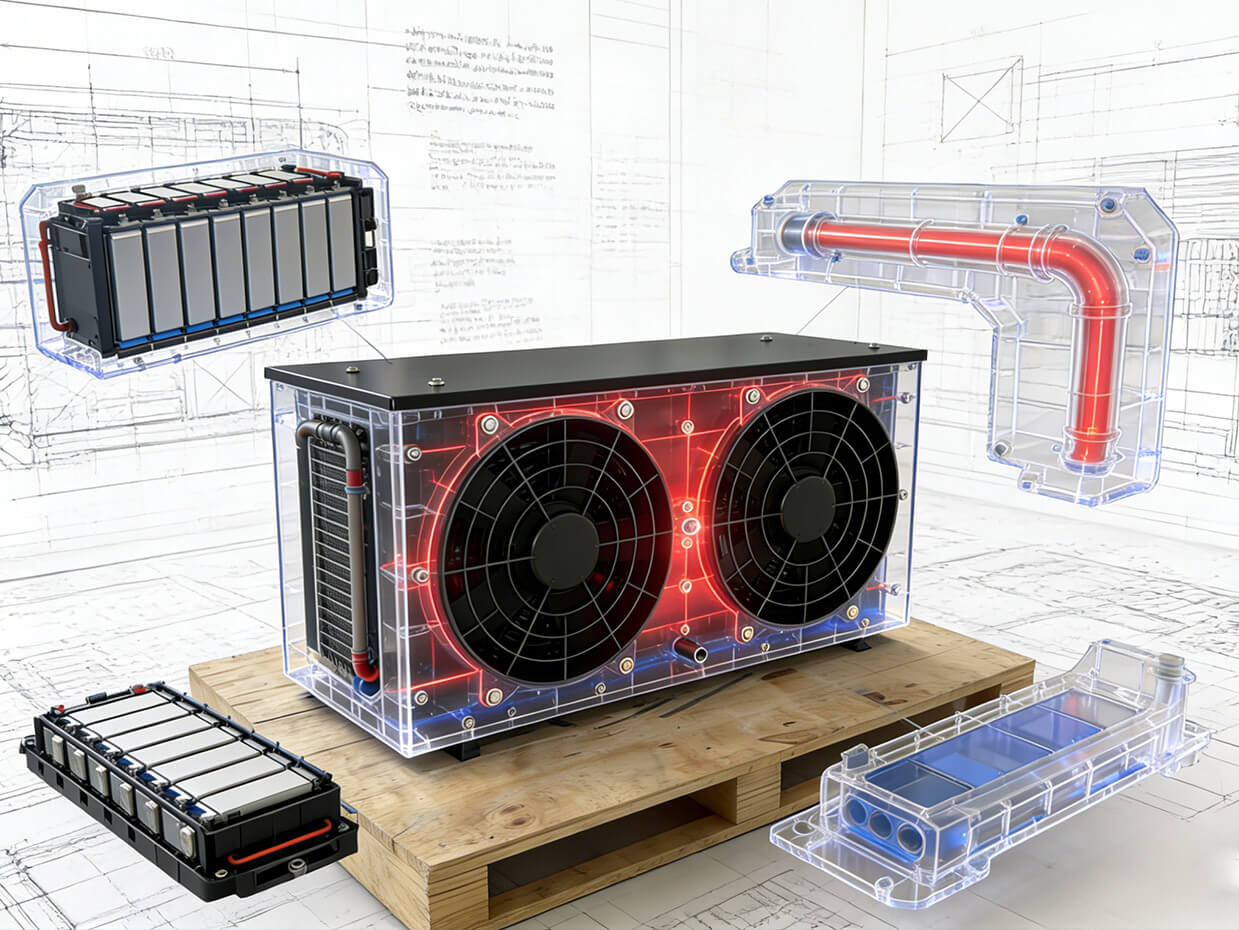
Battery liquid cooling is currently the most mainstream active thermal management technology in the electric vehicle industry. It's belonging to the Battery Management System (BMS) execution system. In a battery liquid cooling system, the heat generated during battery charging and discharging is exchanged through direct contact with cooling plates, and then actively released to the outside through the liquid cooling system. This process is crucial for preventing thermal runaway and ensuring battery life. Its core objective is to maintain the battery pack within the optimal operating temperature range of 10°C to 45°C. And control the temperature difference between individual cells within 5°C. TKT's technology can even achieve precise control within 0.5°C.
Unlike passive thermal management methods such as phase change materials and heat pipes, battery liquid cooling is an active thermal management method. It can cool and heat the battery according to environmental changes and operating conditions. It can effectively absorb and dissipate the heat generated during battery charging and discharging, thus ensuring its normal power output. Correspondingly, it can heat the battery pack at a lower temperature. With the continuous improvement of electric vehicle battery power density and the popularization of fast charging technology, battery liquid cooling has become an irreplaceable core technology for high-power, complex-condition commercial electric vehicles.
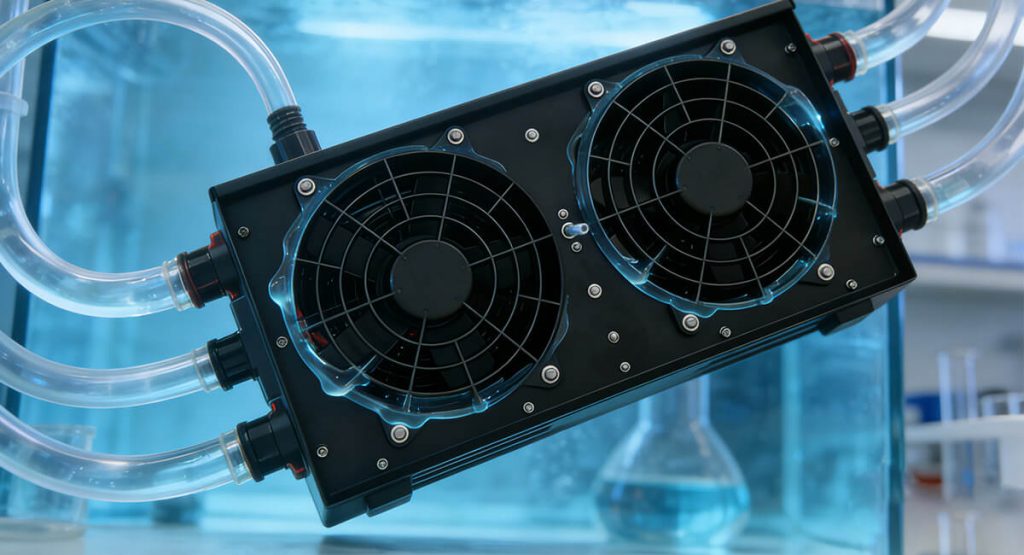
Additional Information: Immersion battery cooling is a more advanced liquid cooling method for high-performance batteries. The battery cells or modules are completely immersed in a special insulating liquid, allowing direct heat exchange between the coolant and the battery surface without any physical barriers. This structure achieves extremely high heat dissipation efficiency and a highly uniform battery temperature distribution. Its disadvantages include the high cost of the liquid and stringent sealing requirements, limiting its application primarily to ultra-fast charging and large-scale energy storage applications.
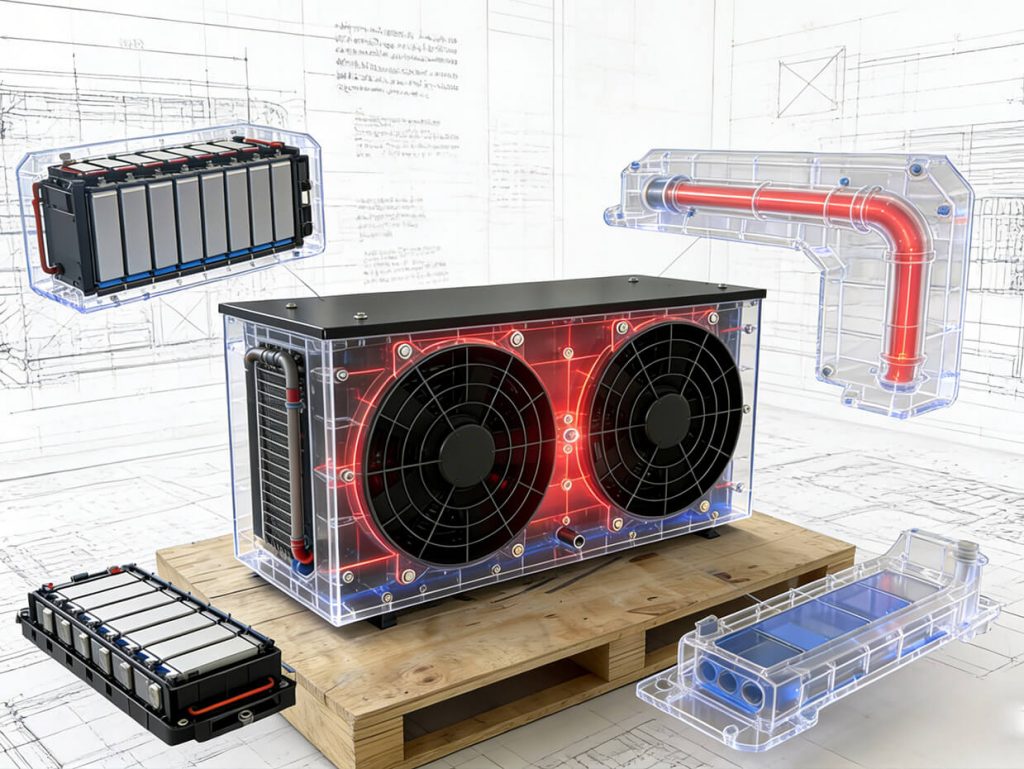
The working principle of battery liquid cooling is based on the mechanisms of heat conduction and convection heat transfer. The entire process is a closed-loop circulation of coolant, mainly consisting of three core steps.
The heat generated by the battery pack during charging and discharging is transferred to the liquid cooling plate, which is in close contact with the battery, through heat conduction. The coolant flows through channels inside the liquid cooling plate, absorbing heat.
The cooled coolant, driven by a water pump, flows to the radiator. The radiator dissipates the heat from the coolant to the external environment through forced air cooling, rapidly reducing the coolant temperature and restoring it to a usable state.
The cooled coolant flows back to the liquid cooling plate, forming a closed loop, and the above steps are continuously repeated.
In low-temperature environments (<0°C), the cooling circuit is closed, and the PTC heater is activated. The heated coolant is then transported to the liquid cooling plate, transferring heat to the battery pack, solving the problems of battery capacity reduction and starting difficulties caused by low temperatures.
This closed-loop system enables precise control and is typically managed by a battery management system (BMS) via a CAN bus. It ensures the battery remains cool in summer and warm in winter. Of course, if your area doesn't require the heating mode, this feature can be disabled to save costs.

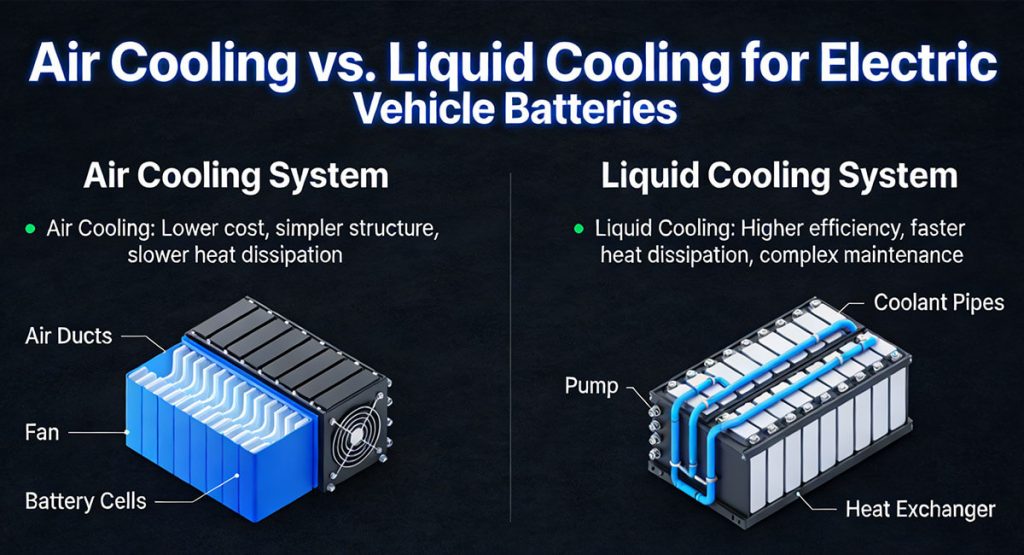
Air cooling and liquid cooling are the two most common active cooling technologies for electric vehicles. When choosing a cooling strategy, manufacturers typically weigh the advantages and disadvantages of air cooling versus liquid cooling. Air cooling is simpler and less expensive, but for high-load applications, liquid cooling offers superior performance.
For commercial applications, the high energy density of modern batteries generates enormous amounts of heat. Air cooling struggles to dissipate this heat quickly and effectively, leading to shortened battery life. Liquid cooling has an extremely high specific heat capacity, making it 3,000 times more efficient at dissipating heat than air cooling. This exceptional efficiency makes it the only viable cooling solution for electric trucks and buses.
| Feature | Air-Cooled Systems | Battery Liquid Cooling Systems |
|---|---|---|
| Heat Transfer Medium | Air | Coolant (Water-Glycol, etc.) |
| Thermal Conductivity | Low (approx. 0.024 W/m·K) | High (approx. 0.4 - 0.6 W/m·K) |
| Temperature Uniformity | Poor (Prone to hot spots) | Excellent (ΔT ≤ 5°C) |
| Energy Consumption | Moderate (Fans) | Higher (Pumps), but more efficient per Watt removed |
| Best For | Low-power EVs, mild climates | Commercial EVs, Buses, Heavy Equipment |
TKT, with 25 years of experience in thermal management, has optimized system integration design, effectively simplifying the control logic of the liquid cooling system and reducing overall manufacturing and maintenance costs.
Temperature is the most critical factor affecting battery life. This relationship grows exponentially. High temperatures accelerate the thickening of the solid electrolyte interfacial film, leading to the loss of active lithium and thus rapid battery degradation.
Tests show that a single battery cell has a cycle life of up to 6238 days (80% remaining capacity) at 23°C, compared to only 272 days at 55°C - a 32°C increase in temperature results in a 95% reduction in battery life.
Battery liquid cooling directly combats this problem by maintaining a stable thermal environment. It prevents the battery from experiencing high-temperature stress during fast charging or peak load operation, thus significantly slowing down the chemical aging process. Furthermore, by ensuring that the temperature difference between battery cells is within 5°C, it also prevents electrochemical instability. Otherwise reduce the effective capacity of the battery pack by 10% to 30%.
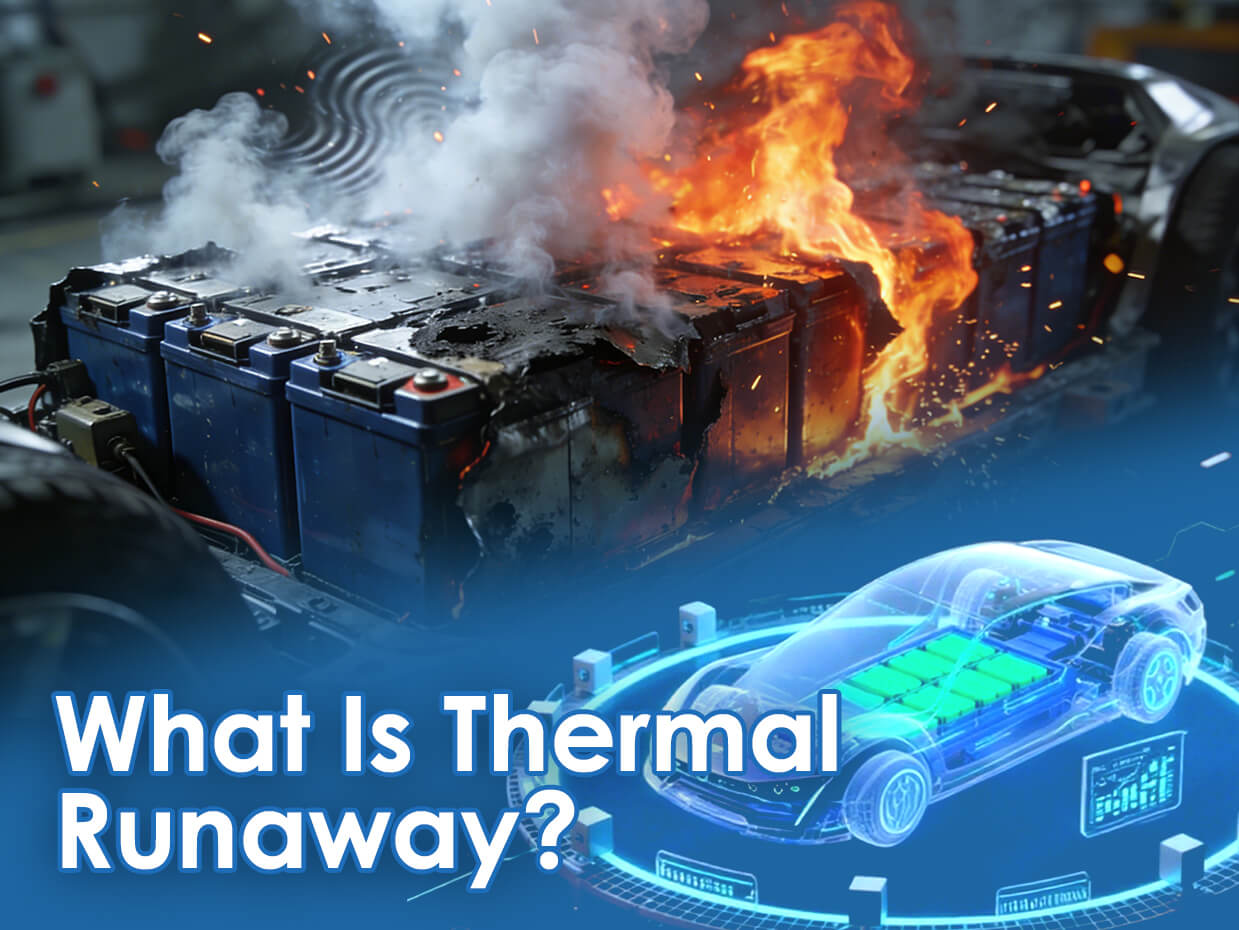
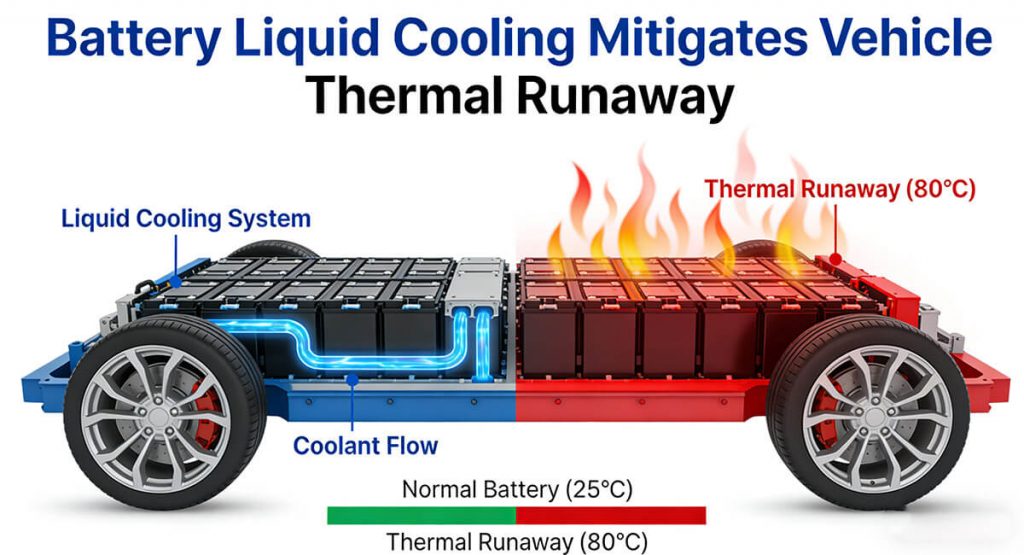
Thermal runaway is the biggest safety hazard for electric vehicle batteries. It is caused by a chain reaction of exothermic reactions triggered by localized overheating (temperatures instantly rising above 800°C). Battery liquid cooling technology can quickly absorb local heat and achieve rapid cooling through real-time temperature monitoring, fundamentally suppressing thermal runaway and thus protecting the battery and extending its service life.
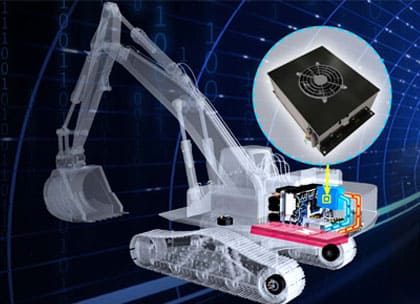
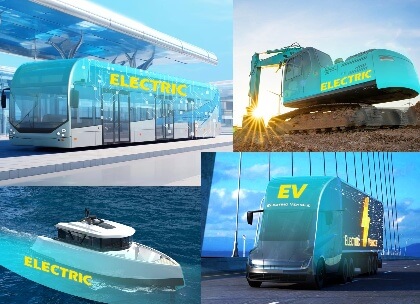
Battery liquid cooling technology boasts strong scalability and adaptability, making it widely used in various electric vehicles and energy storage systems. With the accelerated electrification of the commercial vehicle sector, it has become the preferred thermal management solution for heavy-duty electric vehicles.
Besides commercial electric vehicles, battery liquid cooling is also widely used in supercharging stations, data centers, and low-altitude aircraft. With the rapid development of the global energy storage industry, the demand for liquid cooling technology in energy storage scenarios is also experiencing explosive growth.
Commercial vehicle battery liquid cooling systems are designed for highly dynamic operating environments. They must withstand frequent rapid charge-discharge cycles, severe vibration, mechanical shock, and extreme ambient temperatures, while remaining compact, lightweight, and highly integrated with the vehicle's thermal management system. Indirect liquid cooling using cold plates remains the mainstream solution, prioritizing responsiveness, safety, and space utilization for trucks, buses, and heavy-duty electric vehicles.
Liquid cooling systems for energy storage batteries focus on long-term static stability. Their goal is to achieve a 15-20 year lifespan, high redundancy, low operating costs, and cluster-level temperature uniformity. Indirect cooling and advanced immersion cooling technologies are widely used. The system design required emphasizes maintainability and long-term reliability, rather than lightweight design.
Battery liquid cooling offers significant performance advantages, but its design and development have faced numerous core challenges. TKT has successfully overcome these challenges over the past two decades:
The primary challenge lies in controlling the temperature difference between individual cells within ≤5°C to ensure uniform battery aging and stable performance.
The battery liquid cooling system itself consumes power. A poorly designed system can deplete the vehicle's battery, reducing driving range. Therefore, the goal is to maximize cooling performance while minimizing energy consumption.
The system must be able to cool rapidly to prevent localized overheating events from escalating into widespread thermal runaway and fire.
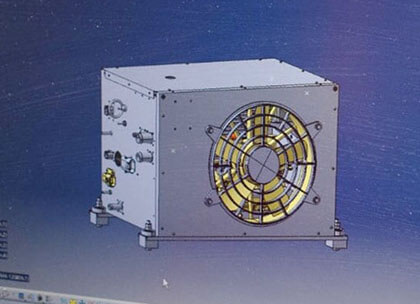
Integrating the system's compressor, condenser, electric water pump, etc., into a compact and durable unit capable of withstanding vehicle vibrations and extreme environmental conditions is a complex task.
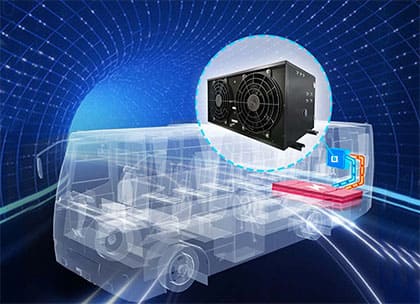
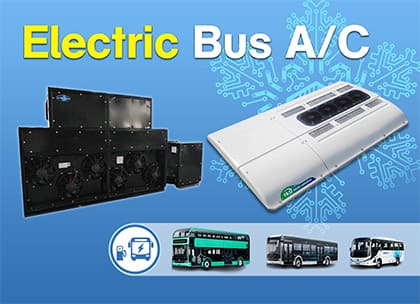
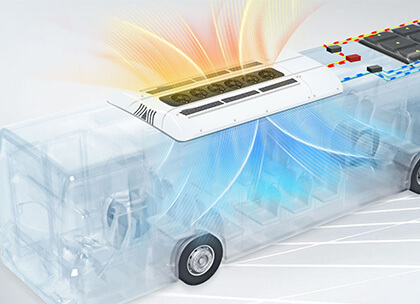
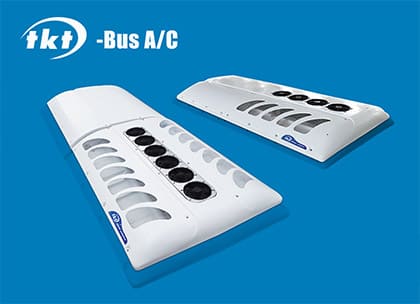
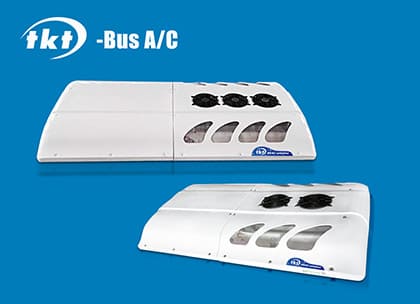
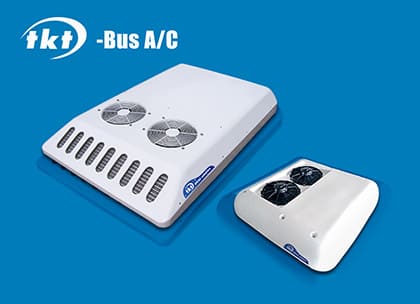
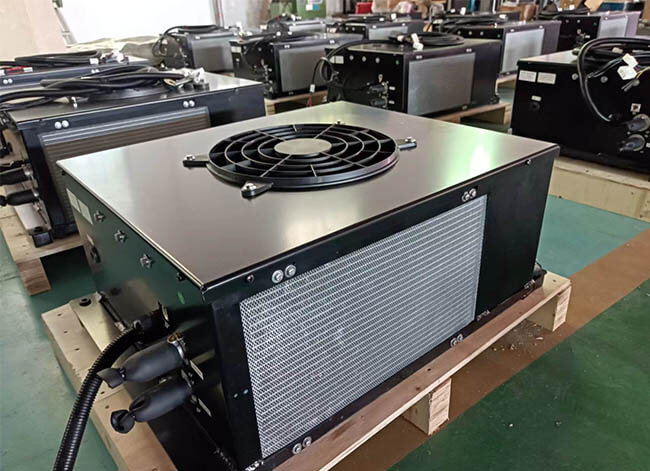
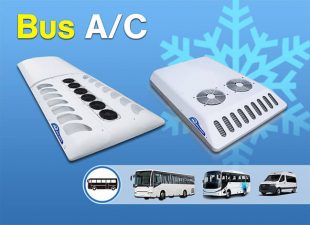
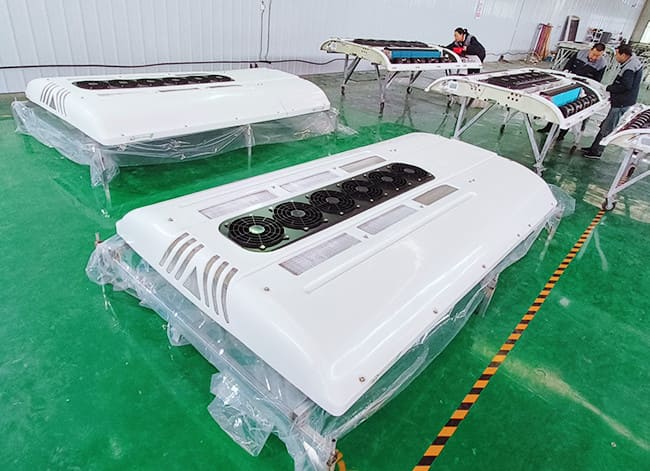
Through repeated research and verification, TKT has achieved integrated air conditioning and BTMS (Body Temperature Management System) devices. By integrating BTMS functionality into the bus air conditioning, it achieves simultaneous cooling of both the bus interior and the bus battery. Currently, this new system is operating stably on buses manufactured by the renowned Indian automaker Olectra.
Founded in 1998, TKT began developing and manufacturing Battery Liquid Cooling Systems (BTMS) in 2014. Leveraging its industry-leading design and manufacturing capabilities, TKT has become a leading global supplier of thermal management solutions for commercial electric vehicle batteries. Its battery liquid cooling products have gained recognition from Fortune 500 automakers such as BYD and Tata Motors.
TKT developed a deeply customized battery liquid cooling system for Olectra's electric bus product line, integrating air conditioning and BTMS functions. This integrated liquid cooling system, specifically developed for Olectra electric buses, has a cooling capacity of 10kW and an air conditioning capacity of 42kW. The new system can effectively reduce battery degradation in buses and extend battery life by more than 30%. Click to view the original article.
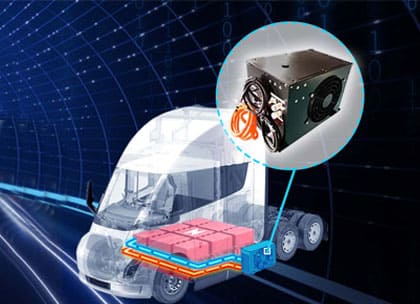
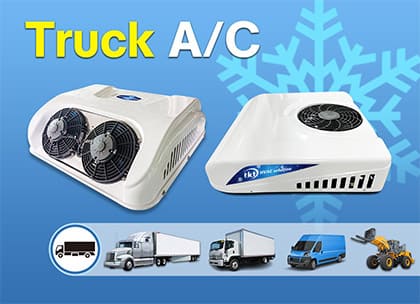
TKT provided electric truck battery cooling systems for Tata Motors, a leading Indian automaker. In response to India's hot and humid climate, TKT optimized the design of pipelines and radiators, improving the system's heat dissipation efficiency by 25% and ensuring stable operation of electric trucks in high-temperature environments above 40°C. Click to view the original article.
As electric vehicle battery packs become larger and more powerful, the importance of liquid cooling for thermal safety, stable driving range, and extended battery life is increasingly evident. Compared to air cooling, liquid cooling offers stronger heat dissipation capabilities, more uniform temperature control, and better meets the needs of commercial vehicles.
With over 10 years of experience, industry-leading cooling performance, and a proven track record of successful collaborations with top automakers, TKT is your trusted partner for advanced battery thermal management solutions. Ready to optimize your electric vehicle battery performance?
Further reading: What Is Thermal Runaway As It Relates To EVs, Thermal Management News And Updates 2025, What is Battery Immersion Cooling?
Facebook: https://www.facebook.com/TKTHVAC/
Linkedin: https://www.linkedin.com/company/tkt-hvac
Youtube: https://www.youtube.com/@TKTHVAC
None