This document outlines the contents of the bus air conditioning maintenance manual. We encourage customers to perform routine and periodic inspections to extend the service life of the bus air conditioning system.
The bus air conditioning unit is considered a consumable item. Identifying issues early allows for timely resolution, thereby preventing more significant problems. Additionally, we offer warranty services, keeping repair costs low. Therefore, regular inspections and maintenance are essential. This ensures a longer lifespan and greater stability for the air conditioning system.
1. Clean the evaporator and return air filter: Regularly clean the evaporator and return air filter to prevent dust and dirt buildup that may clog the system, affecting cooling performance and air quality.
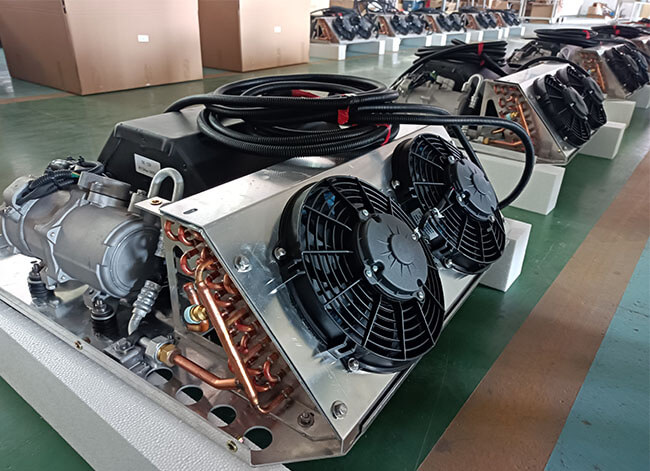
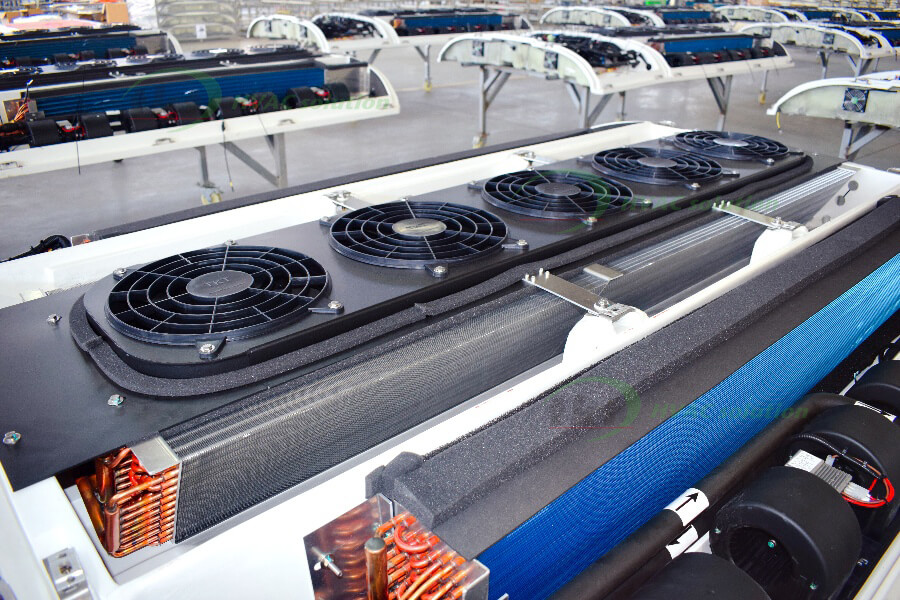
2. Inspect the condenser and compressor: Remove dust from the condenser and compressor to ensure proper heat dissipation. Simultaneously, check for condenser blockages and clean as needed.
3. Inspect Bus Air Conditioning Compressor Belt: Check compressor belt tension for proper tightness to prevent slippage or detachment.
4. Inspect Electrical System: Verify all electrical connections are secure, free from loosening or damage. Simultaneously, test electrical components such as relays and sensors for normal performance.
5. Check Refrigerant: Regularly inspect refrigerant levels to ensure sufficiency. Replenish promptly if leaks are detected. Pay attention to refrigerant type and purity, avoiding mixing different types of refrigerants.

Experienced bus air conditioning specialists typically conduct routine inspections using four methods: listening, observing, touching, and measuring.
This includes monitoring the engine, compressor, evaporator fan, condenser fan, relays, and other components. When the air conditioning system starts and the compressor begins operation, a slight increase in engine noise is considered normal. If any component produces significantly louder or unusual sounds, shut down the system immediately to prevent further damage.
1. Pressure, coolant temperature, oil pressure, and various performance indicator lights on the bus dashboard.
2. Signal indicator lights or warning codes on the bus air conditioning system control panel.
3. Inspect the piping system, checking each joint for signs of leakage and oil contamination.
4. Observe refrigerant flow through the sight glass.
5. Check all refrigeration components for condensation, frost, or ice buildup.
6. Inspect all electrical system connections for burn marks.
1. Feel the temperature and airflow at the bus cabin's air vents.
2. Alternately touch the compressor's discharge pipe and suction pipe. A noticeable temperature difference indicates normal operation.
3. Alternately touch the condenser's discharge pipe and suction pipe. The discharge pipe should be cooler than the suction pipe.
4. Alternately touch both ends of the dryer. If the front end feels hot and the rear end cold, stop immediately.
5. Alternately touch both ends of the expansion valve. The inlet should feel hot, while the outlet should feel cold.
Caution: When touching the air conditioning system, exercise extreme caution. Avoid injury from high-speed rotating components and prevent burns from the engine's heat!
To draw accurate conclusions, it is necessary to test the bus air conditioning system using instruments such as pressure gauges, leak detectors, multimeters, anemometers, and tachometers. Only by systematically analyzing the test results alongside the fault symptoms can the true cause of the malfunction be identified. TKT stand ready to provide assistance at any time to help resolve the issue.
1. Pipe or refrigerant leak: Immediately tighten pipes and recharge refrigerant.
2. Clogged filter or radiator fins: Clean thoroughly with soapy water.
3. Insufficient fan speed: Check for loose or disconnected wiring, then secure.
4. Loose compressor belt: Tighten or replace. Use a tension gauge for more accurate results.
5. Moisture or air in the system: Replace the dryer filter or evacuate the refrigerant. Repressurize, evacuate, and recharge the system. Use an electronic scale for precise refrigerant charging.
6. Incorrect refrigerant type added: Evacuate immediately and contact us urgently for salvage attempts.
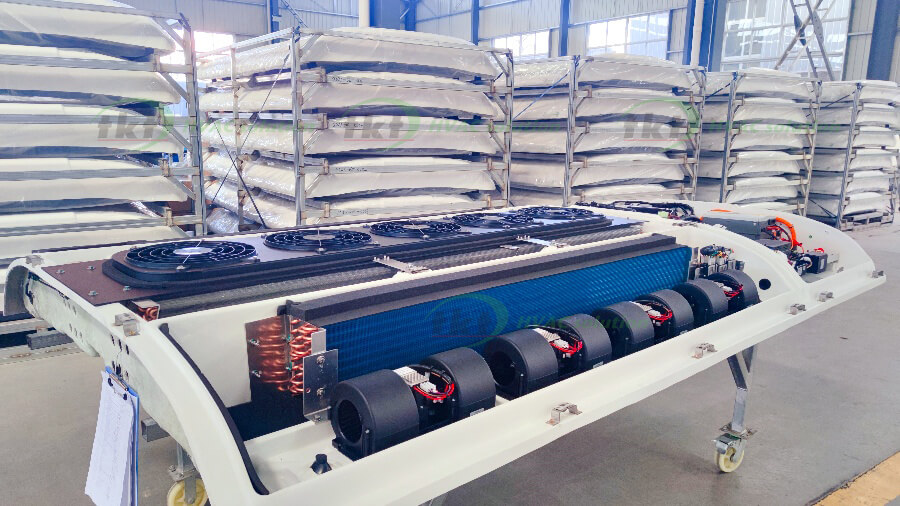
After several years of operation, air conditioning often feels less effective than it used to be, and cleaning the return air vent filter doesn't help. The most common reason is likely a dirty evaporator fan impeller. In this case, you can remove the fan, soak it in warm water first, then rinse it with a degreaser. Of course, motor aging and worn carbon brushes can also cause this issue.
TKT EV solutions are sold in 85 countries and are trusted by Fortune 500 companies such as BYD and TATA. Founded in 1998 in Henan, China, TKT is a trusted partner to global automakers including BYD, Tata Motors, Marco Polo, Daewoo, Isuzu, Yutong, Switch Mobility, Neoplan, and CAT. TKT provides OEM services, customized solutions, and exceptional after-sales support.

Further reading: Analysis of Indian Bus Air Conditioning System Market, What Are The Bus Air Conditioning Parts? Bus HVAC Project for Olectra, the Bus Manufacturer
Facebook: https://www.facebook.com/TKTHVAC/
Linkedin: https://www.linkedin.com/company/tkt-hvac
Youtube: https://www.youtube.com/@TKTHVAC