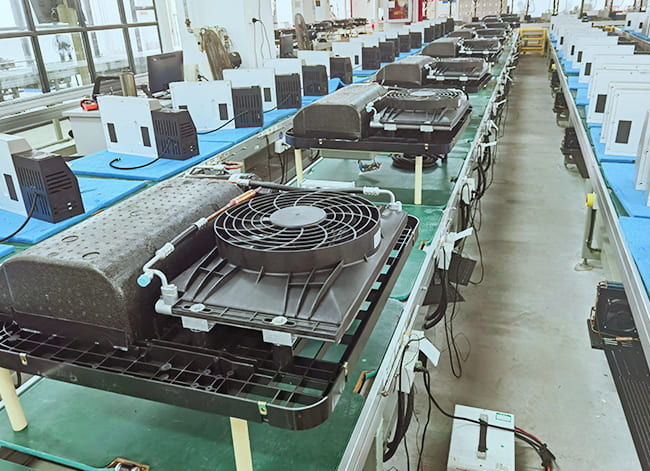
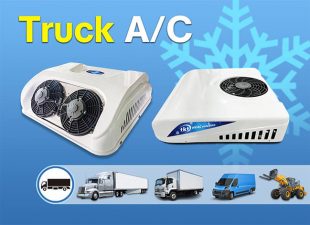
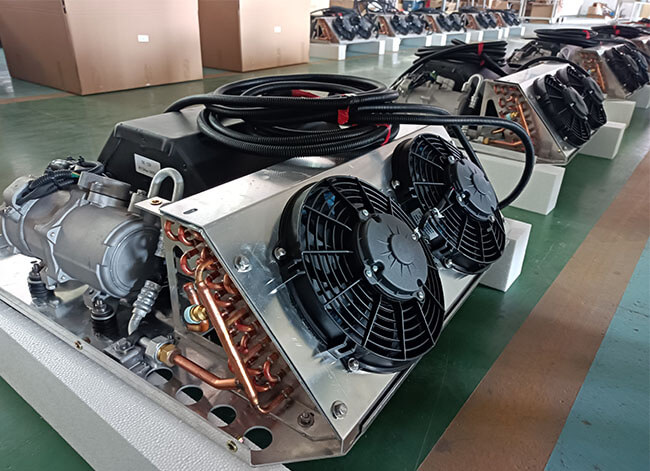
As the concept of green transportation gains traction, demand for electric air conditioning systems among traditional bus operators has surged. Many owners of conventional buses envy the quiet operation and eco-friendliness of electric bus air conditioning. However, while electric bus air conditioning delivers powerful cooling, it requires a high-voltage power supply system of 400V or higher. For existing fuel-powered buses, retrofitting is costly and complex. This has deterred many bus drivers and companies. So what can be done? Is there a suitable solution? This article will introduce the 24V bus air conditioner solution, exploring technical details and real-world application scenarios.
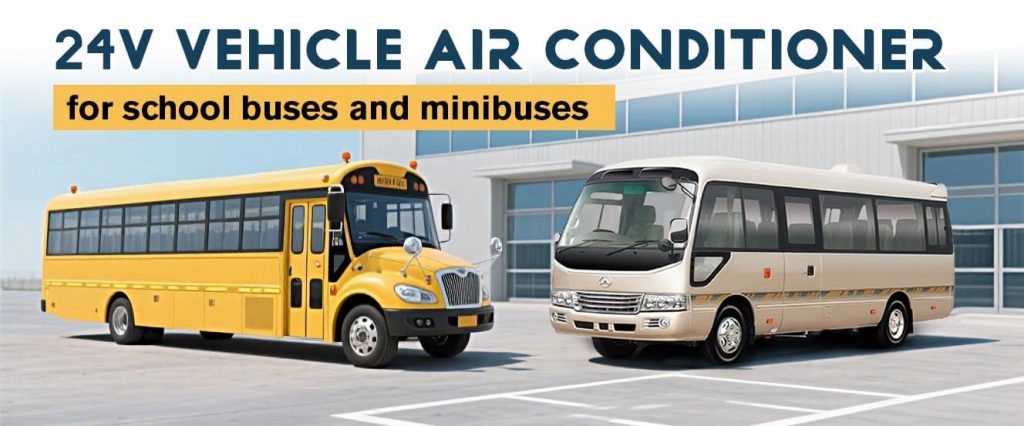
Traditional bus owners face a difficult choice: on one hand, engine-driven air conditioning requires the engine to idle during rest stops, resulting in high fuel consumption, excessive noise, increased engine wear, and higher exhaust emissions. On the other hand, directly adopting the 400V-750V high-voltage air conditioning systems used in electric buses is highly impractical. High-voltage systems demand specialized compressor drivers and extensive circuit modifications, entailing substantial investment costs. While 24V bus air conditioners are easy to install, their individual cooling capacity is generally insufficient to meet the entire bus's cooling needs, which has long been the primary bottleneck limiting their adoption.
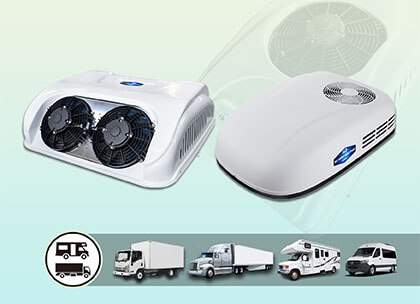
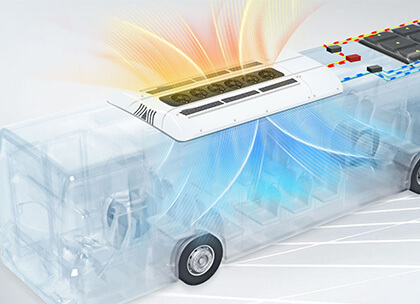
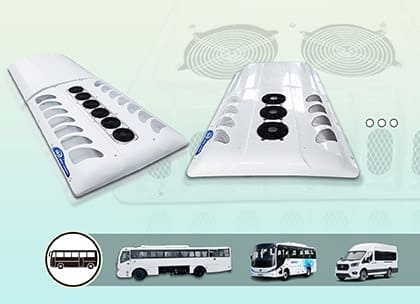
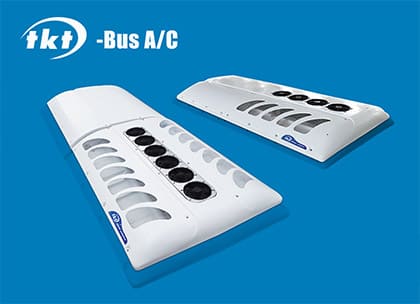
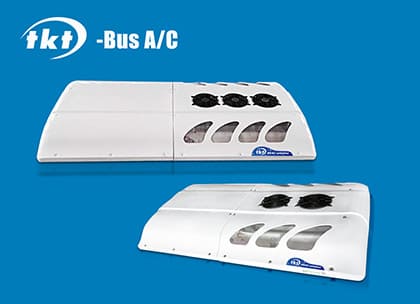
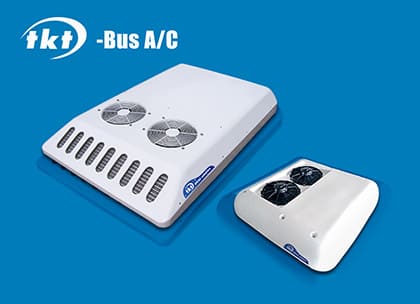
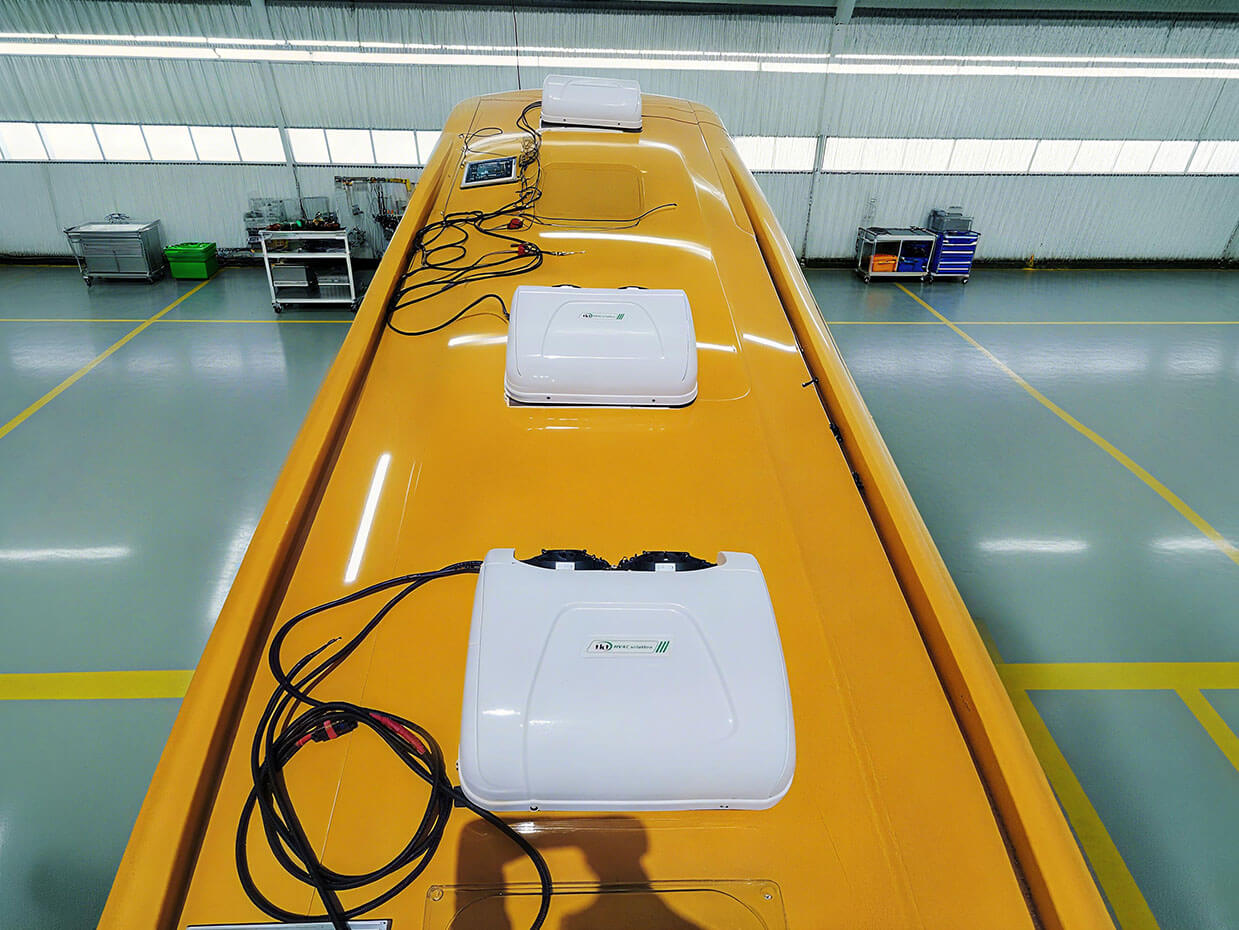
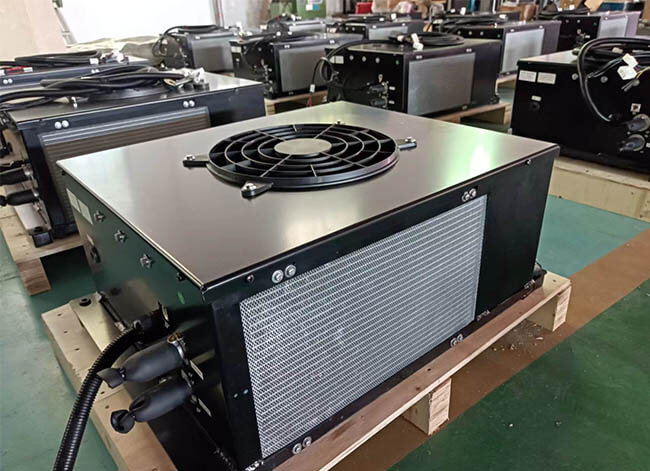
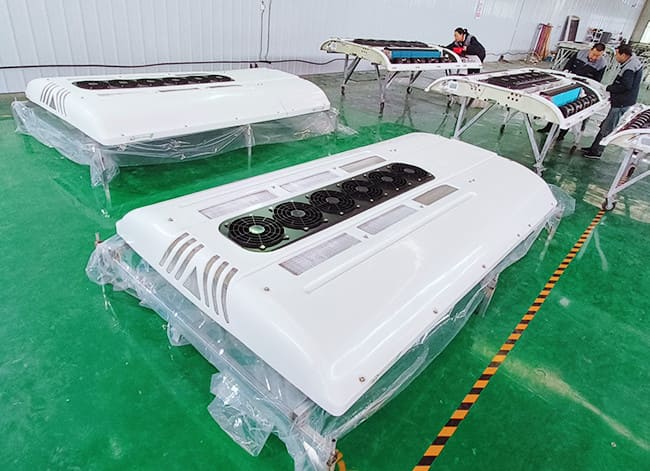
TKT's solution employs parallel operation of multiple 24V DC electric parking air conditioners to achieve low-cost, high-efficiency cooling upgrades. By increasing the number of 24V rooftop air conditioners, total cooling capacity is enhanced, enabling traditional buses to achieve sufficient cooling performance without modifying their high-voltage systems. The core advantage of this solution lies in fully leveraging the plug-and-play nature of 24V parking air conditioners. Furthermore, the uniform layout of multiple units provides improved airflow distribution while eliminating the complexity of ductwork installation.
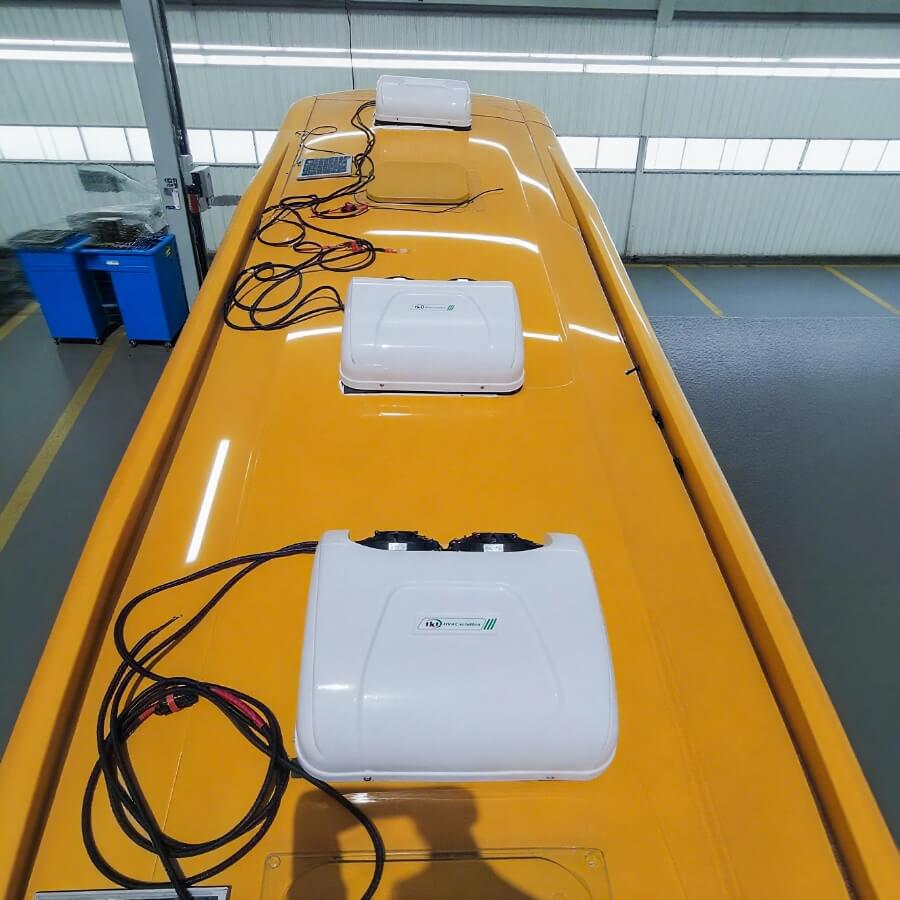
To enable simultaneous operation of multiple 24V bus air conditioners, increased battery capacity and sufficient current output are required.
Specific configuration recommendations are as follows:
Battery capacity calculation: Current (I) = Power (W) / Voltage (V). Using the TKT 50ER as an example:
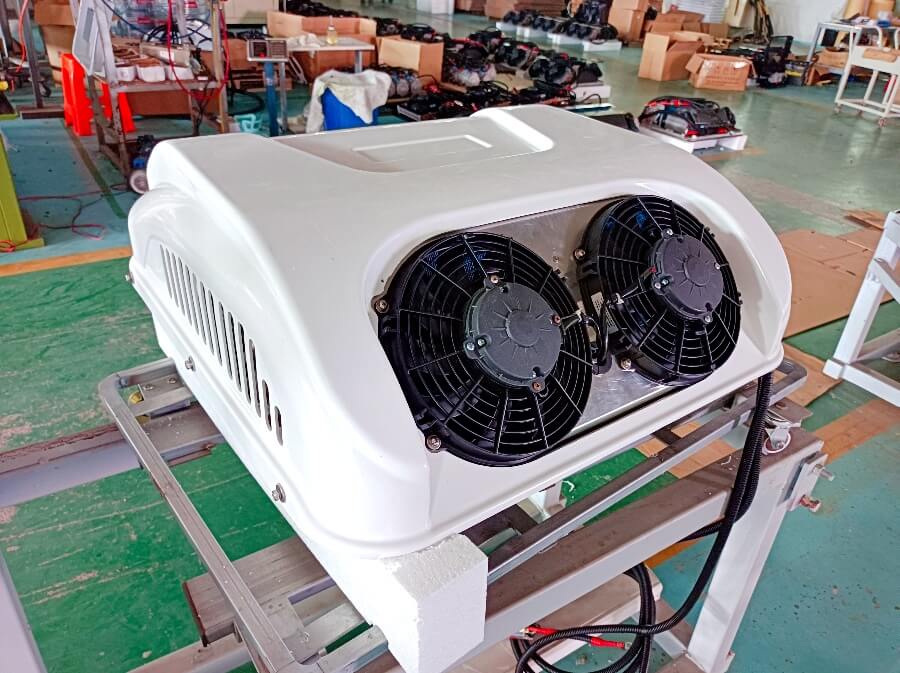
Three 24V air conditioners with a rated power of 1080W each operate simultaneously, totaling 3240W. The total current demand is approximately 135A.
For continuous operation over 4 hours, considering a 30% reserve capacity requirement: Required Capacity (AH) = 135A × 4H ÷ 0.7 ≈ 800AH.
Configuration Solution: We recommend using multiple 24V batteries connected in parallel. Parallel connection maintains constant voltage while adding the capacities (AH) together. For example, four 215AH 24V batteries connected in parallel (4 × 215AH = 860AH).
To ensure consistent battery performance and extend overall lifespan, it is essential to use batteries of identical specifications, brand, and age.
Some may wonder: Does using the air conditioning while driving excessively drain the battery? “On-the-Go Charging + Stationary Discharging,” without additional drain on vehicle power.
Stationary Mode: When the engine is off, the air conditioning is powered independently by the expanded battery pack, meeting cooling needs during temporary stops (e.g., waiting for passengers, resting).
Driving State: After the engine starts, the bus's original alternator simultaneously charges the battery pack while powering the air conditioning. The AC prioritizes alternator power; only when alternator capacity is insufficient (e.g., when in-vehicle TVs, lighting, etc., are also activated) does it draw from the battery as backup. This process does not consume any additional power from the vehicle's starter battery.
This 24V bus air conditioner solution offers significant advantages:
1. Cost Optimization: Equipment procurement costs are substantially reduced compared to 400V high-voltage systems.
2. Simple retrofitting with short lead times: Compact 24V bus air conditioners eliminate the need for high-voltage wiring and ductwork, allowing uniform rooftop placement. This streamlines retrofitting and shortens project timelines.
3. Easy maintenance: Both the 24V air conditioning system and batteries are straightforward to service and replace. A single unit failure does not disrupt overall operation.
4. Energy efficiency and environmental friendliness: Utilizing residual engine power during operation results in lower overall energy consumption compared to traditional air conditioning systems.
5. High safety performance: Eliminates electrical hazards associated with high-voltage systems. Utilizing 24V safety voltage ensures no severe electric shock incidents occur, even during malfunctions.
Of course, this solution has a notable limitation: potential insufficient cooling capacity. If your region experiences extreme heat or your bus has a large interior space, this option may not be suitable. We recommend detailing your bus specifications so our experts can provide tailored recommendations based on your specific circumstances.
Click to browse TKT 24V bus air conditioner products.


Further reading: Bus Air Conditioning Maintenance Manual, What Are The Bus Air Conditioning Parts? Bus HVAC Project for Olectra, the Bus Manufacturer
Facebook: https://www.facebook.com/TKTHVAC/
Linkedin: https://www.linkedin.com/company/tkt-hvac
Youtube: https://www.youtube.com/@TKTHVAC