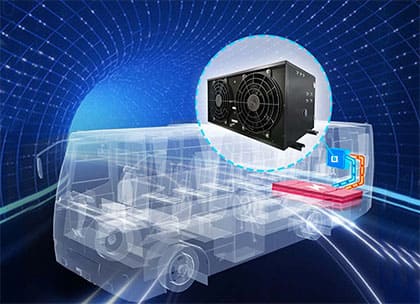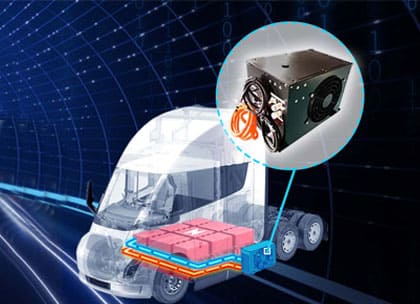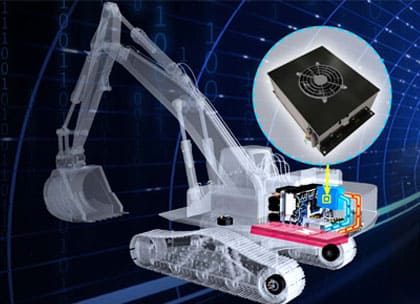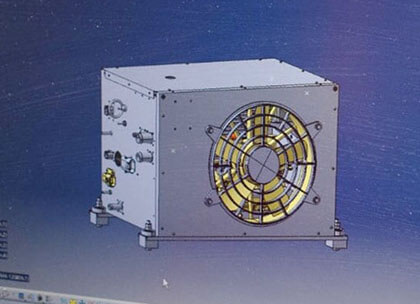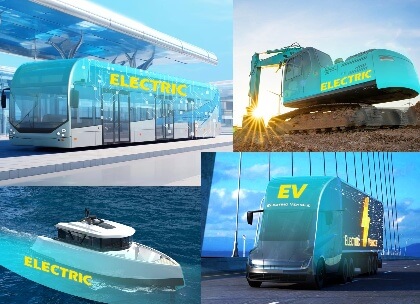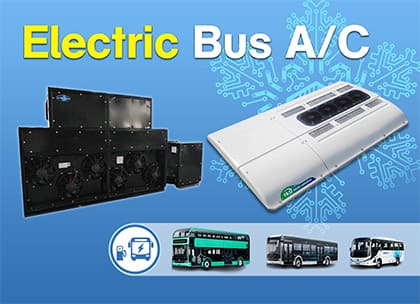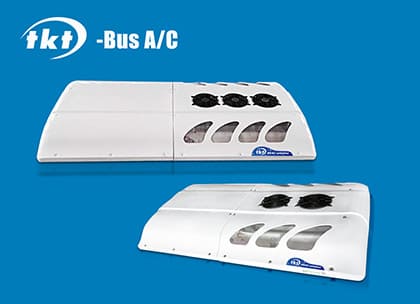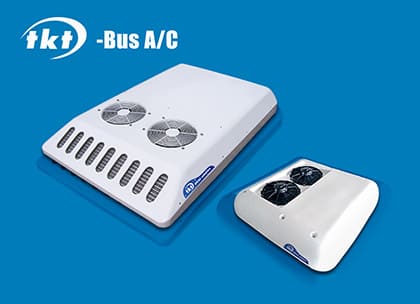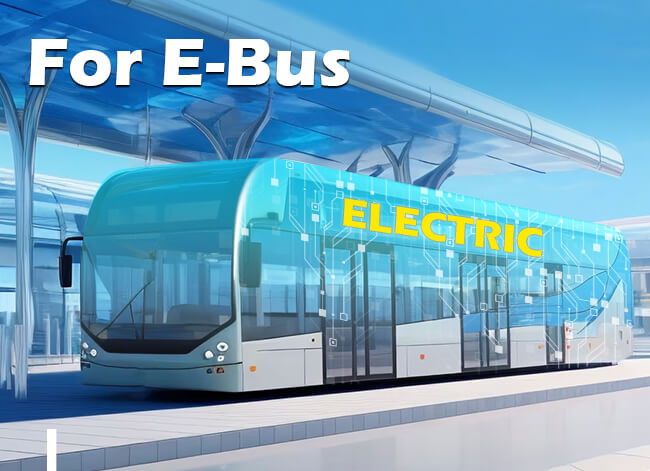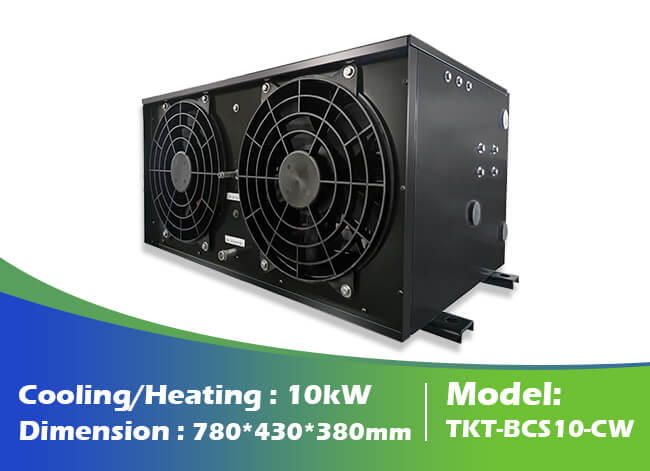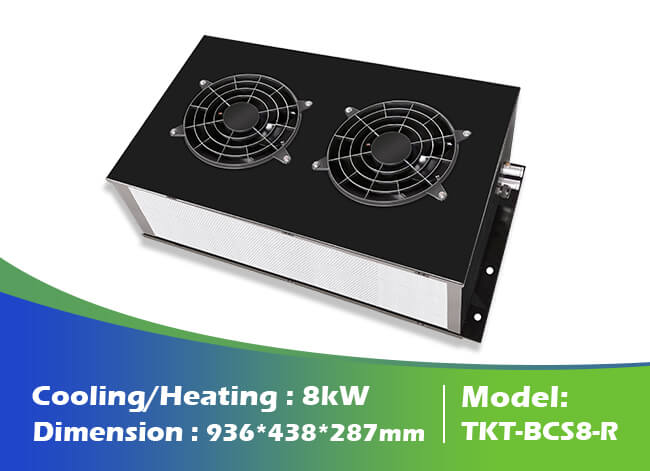
Especialmente projetado para BTMs de ônibus elétricos, refrigeração líquida da bateria.
1. Capacidade de resfriamento: 10KW / 8KW / 5KW / 3KW
2. Faixa de tensão: CC 220V-750V
3. Personalizado: Aquecimento / OEM / Dimensão
4. Vantagens: 0.5 ℃ Controle preciso de temperatura. Plugue e reproduza. Fortuna 500 fornecedor.
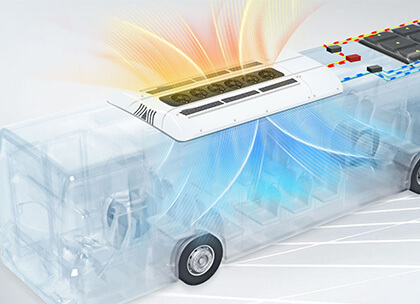
BTMS stands for Battery Thermal Management System. The electric bus BTMS is a core system specifically designed to regulate the temperature of the electric bus’s power battery. It ensures the battery operates within a safe and efficient temperature range to improve performance, extend lifespan, and avoid thermal runaway. Electric bus BTMS utilizes large-capacity power batteries, generating significant heat. Portanto, liquid battery cooling systems are currently used.
TKT’s electric bus BTMS is fully automated. It communicates with the vehicle controller and battery management system via the CAN bus, synchronizing battery temperature data in real time and adjusting operating frequency.

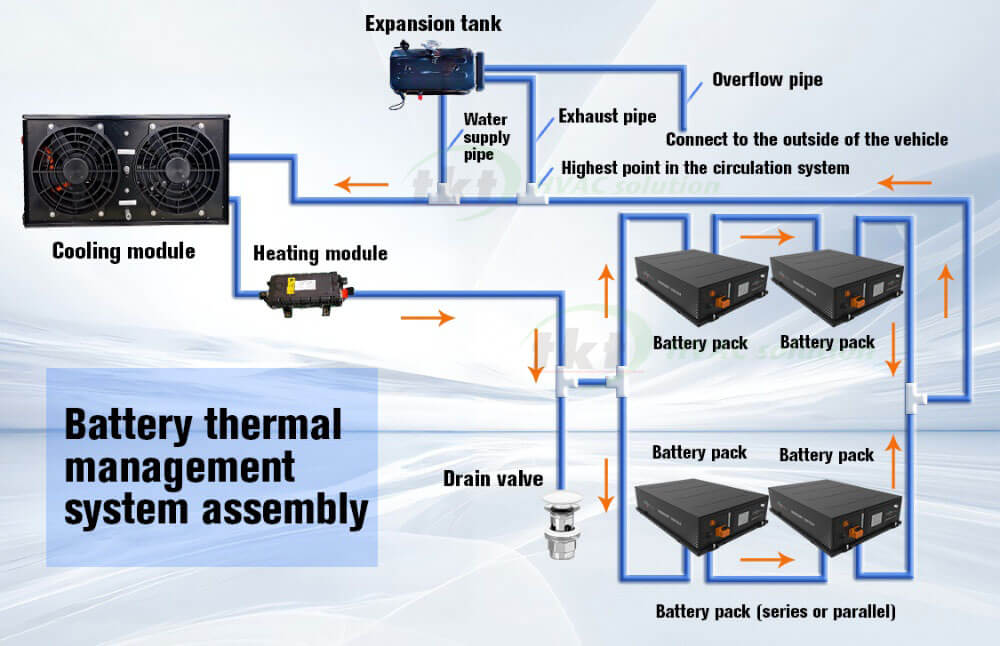
The BTMS system for electric buses typically includes cooling, aquecimento, resfriamento, and electrical systems.
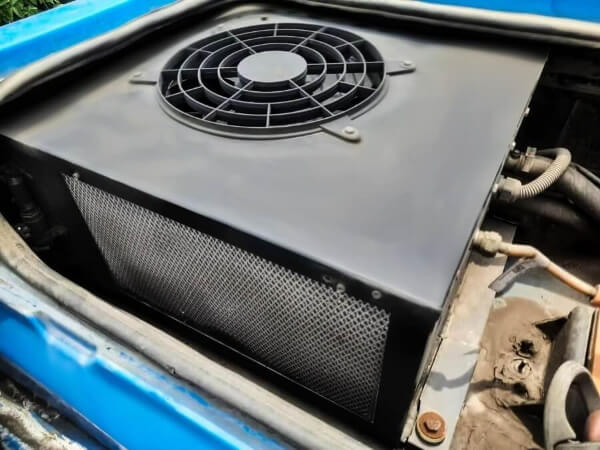
1. The cooling system consists of a compressor, condensador, trocador de calor de placas, and water pump. It circulates the coolant to cool the battery.
2. The heating system uses a PTC water heater to heat the circulating fluid and warm the battery.
3. The cooling system includes an air-cooled radiator tank.
4. The electrical system includes the controller and wiring harness.

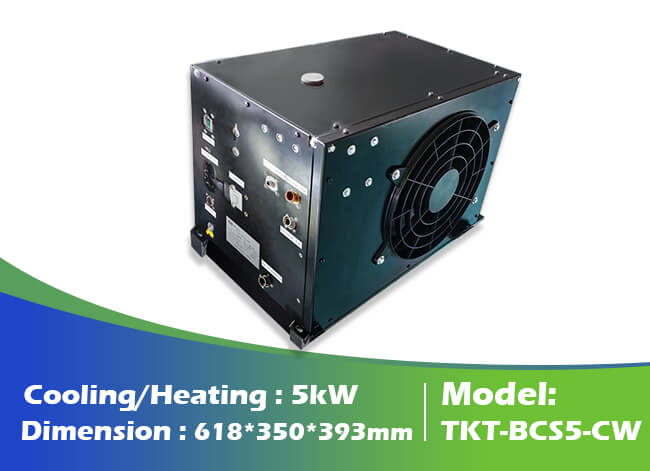
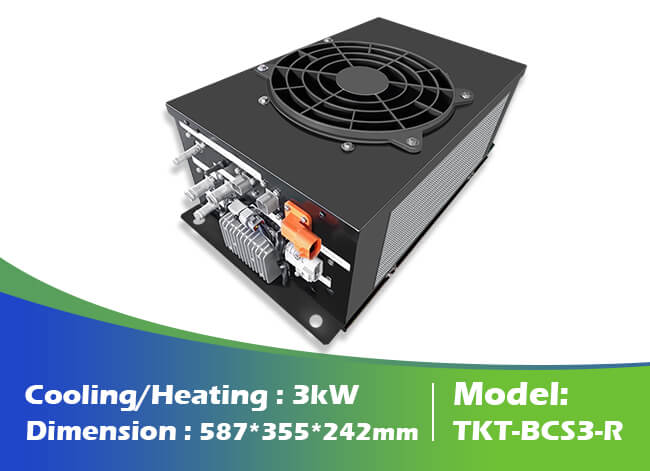
| Modelo | 10CW | 8R | 5CW | 3R |
| Capacidade de resfriamento | 10KW | 8KW | 5KW | 3KW |
| Dimensões padrão | 780*430*380milímetros | 936*438*287milímetros | 618*350*393milímetros | 587*355*242milímetros |
| Peso padrão | 40kg | 40kg | 30kg | 25kg |
| Direção da saída de ar | Lado | Principal | Lado | Principal |

Contate-nos para obter o PDF do BTMS
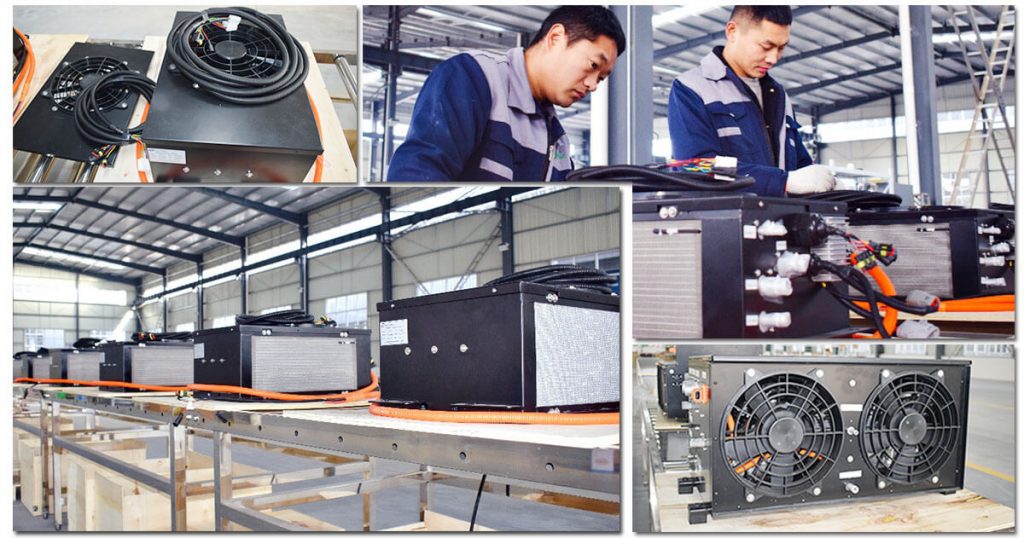
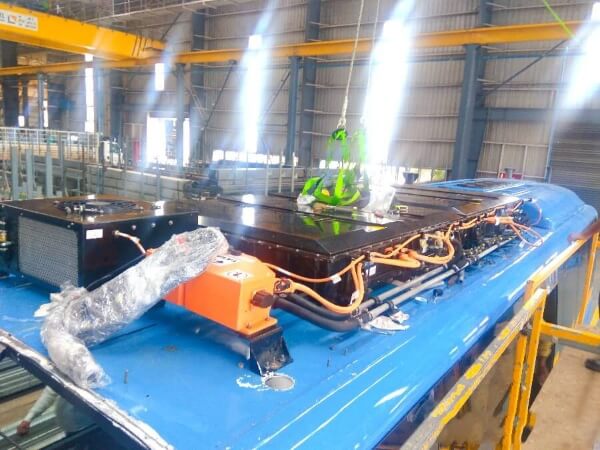
As early as 2018, we established a deep partnership with TATA Motors, uma fortuna 500 empresa. We custom-developed a 9m electric bus air conditioner and electric bus BTMS. Depois de passar por várias rodadas de testes rigorosos, we became their designated supplier of electric bus air conditioners and BTMS.
Posteriormente, TATA Motors initiated another collaboration project with us for the BTMS system of electric trucks. These collaborations serve as a testament to our design capabilities, qualidade do produto, e suporte pós-venda.
Clique para ver mais fotos de casos de cooperação
Vantagens
1. Efficient Heat Dissipation
The liquid has high thermal conductivity, quickly dissipating the large amounts of heat generated during charging and discharging. It is particularly suitable for high-temperature environments and large-capacity power batteries.
2. Excellent Temperature Uniformity
The battery cooling plate design provides a large contact area between the liquid and the battery, reducing local hot spots. This allows for precise control of inter-battery temperature differences and minimizes temperature differences.
Desvantagens
1. High System Complexity
Requires integration of components such as water pumps, piping, and seals, increasing weight.
2. High Cost
Requires more components, a more sophisticated design, and more complex assembly than air cooling.
Vantagens:
1. Simple and Reliable Structure
No liquid circulation system is required; air flow is driven solely by a fan. Suitable for small battery packs or auxiliary cooling scenarios.
2. Low Cost
Lower production costs and no liquid replacement costs.
Desvantagens:
1. Low heat dissipation efficiency.
Poor air thermal conductivity makes it difficult to control battery temperature in high-temperature environments (Por exemplo, above 45°C), which can easily lead to thermal runaway.
2. Poor temperature consistency.
Improper air duct design can result in temperature differences of more than 10°C between battery modules, affecting battery life and safety.
Resumindo, the high-voltage power batteries in electric buses generate significant energy and heat, necessitating a liquid battery cooling system. Air cooling systems cannot meet these cooling requirements.
1. “Sistema de gerenciamento térmico da bateria para veículos elétricos e duração da bateria” Clique aqui para ver
2. “Análise do sistema de resfriamento de bateria para barramento elétrico, Caminhão” Clique aqui para ver
3. “Sistema de resfriamento de líquidos da bateria - como funciona?” Clique aqui para ver
4. “Projeto BYD K9: Sistema de resfriamento de bateria EV combinado com Bus A/C” Clique aqui para ver
5. “Bateria BTMS: Princípio, Projeto, Instalação – TKT HVAC” Clique aqui para ver
6. “Sistema de gerenciamento térmico de bateria para caminhão / Ônibus etc.. – Fornecido ao topo 500 TATÁ” Clique aqui para ver
7. “Sistema de gerenciamento térmico de bateria para mobilidade de switch – TKT” Clique aqui para ver
8. “Sistema de gerenciamento térmico de bateria personalizado (BTMS) – TKT HVAC” Clique aqui para ver
9. “Como projetar o local de instalação do ônibus BTMS” Clique aqui para ver
10. “Resfriamento de bateria | Sistema de gerenciamento térmico de bateria – TKT” Clique aqui para ver
Clique para navegar Soluções BTMS para ônibus elétricos
Clique para navegar Soluções BTMS para caminhões elétricos
Clique para navegar Soluções BTMS para equipamentos elétricos pesados
Clique para navegar Soluções BTMS para marinha elétrica
Clique para navegar Soluções BTMS personalizadas OEM
The electric three wheeler rickshaw has become the best choice for short-distance commuting in cities and rural areas.
This article mainly explains the importance and key points of EV charging station maintenance. Don’t miss it.
This article explores various battery pack thermal management methods and their importance in electric vehicles and other applications.