With the continuous improvement of automotive and electronic device performance, and the explosive growth of artificial intelligence computing power, thermal management systems, as a core supporting technology for ensuring the stable operation of high-precision systems, have become one of the key bottlenecks restricting technological development. This article will review the thermal management news throughout 2025. بالطبع, to help more people understand, I will also introduce the basic concepts of thermal management, its wide applications in various fields, and important exhibitions. I hope this will provide you with valuable reference.
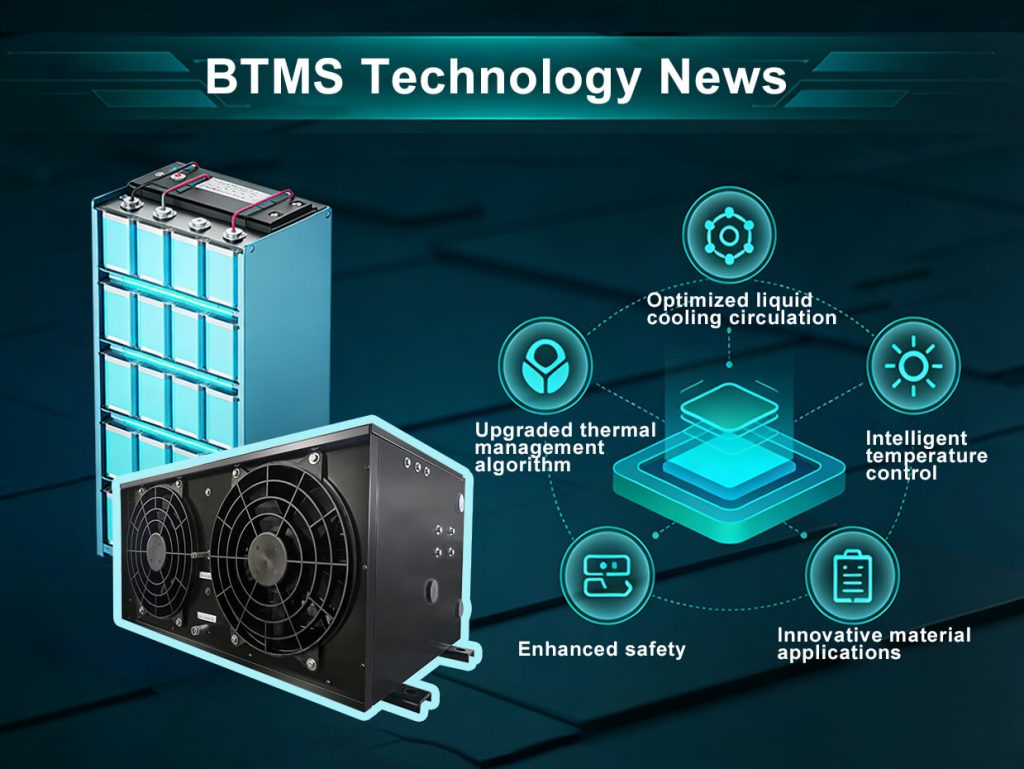
A thermal management system is an engineering discipline focused on the efficient management of heat within equipment and systems. This system utilizes the physical properties of heat conduction, convection, radiation, and thermodynamics to maintain equipment temperatures within acceptable operating ranges. Its core objective is to keep critical components operating within safe and efficient temperature ranges, preventing performance degradation, shortened lifespan, or safety accidents caused by overheating. As equipment power density continues to rise, traditional, simple heat dissipation methods are no longer sufficient. Modern thermal management has evolved into an interdisciplinary and systematic engineering technology system.
1. Passive Cooling: This method does not rely on external energy sources and dissipates heat through the high thermal conductivity, thermal radiation properties, or natural convection of the materials themselves. These solutions are simple in structure and widely used in low-power devices or space-constrained scenarios, such as thermal pads and graphite heat dissipation films in consumer electronics.
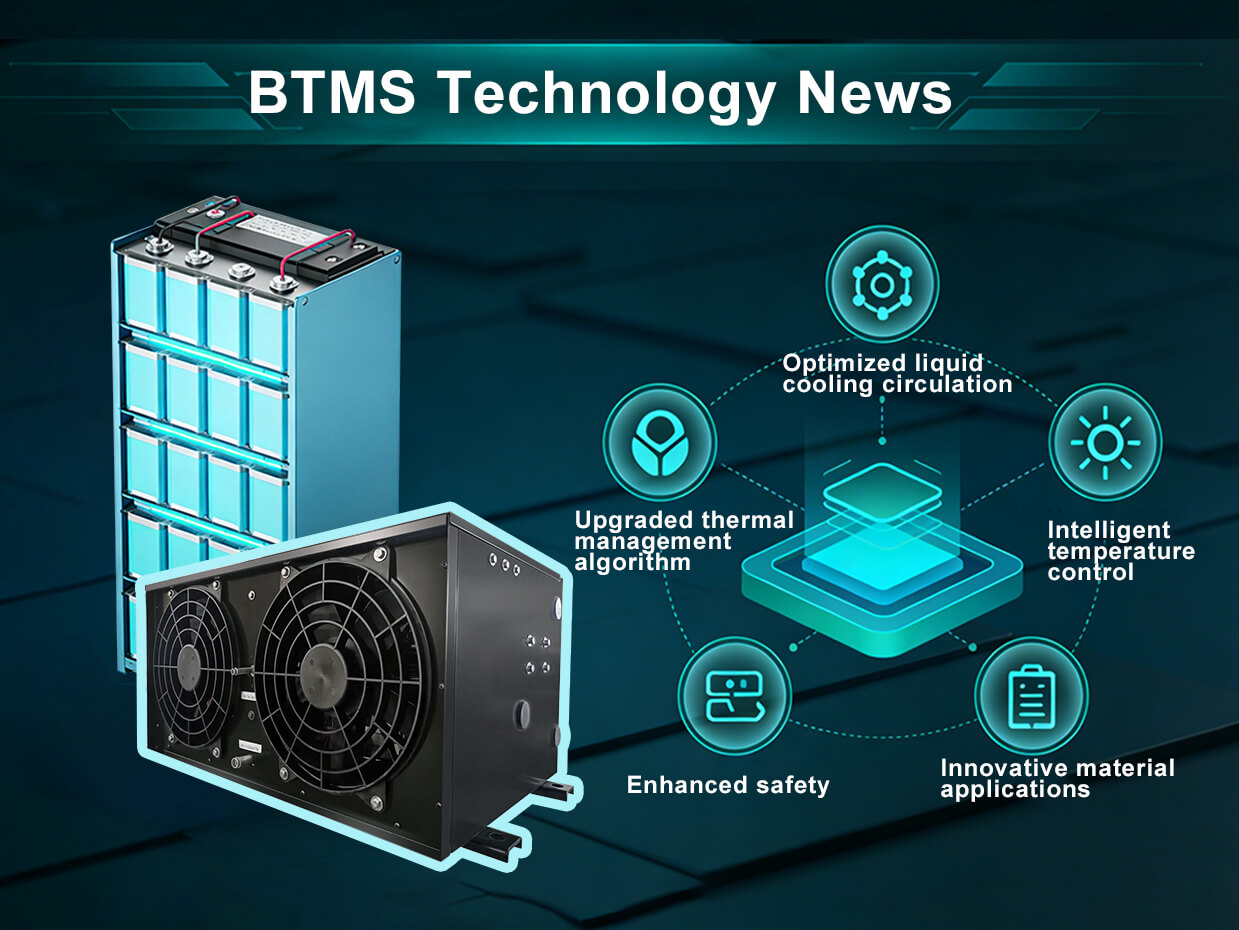
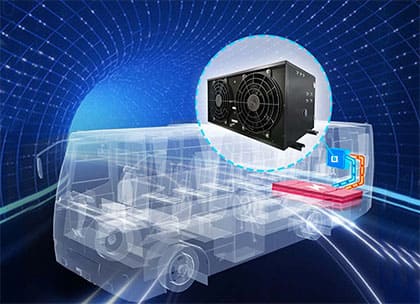
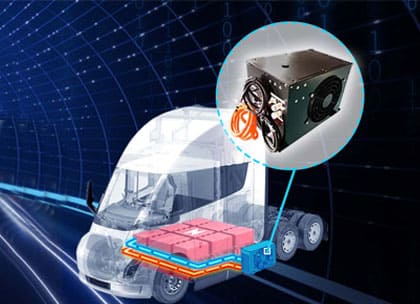
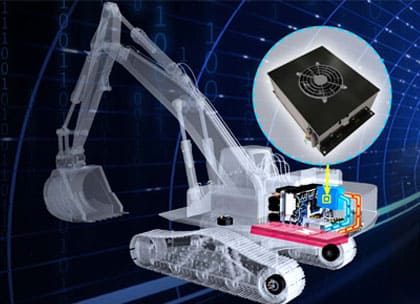
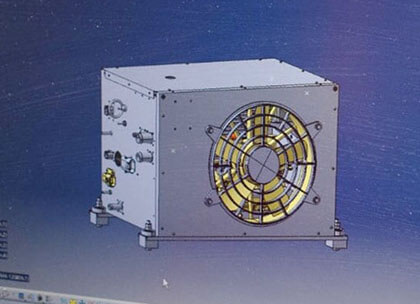
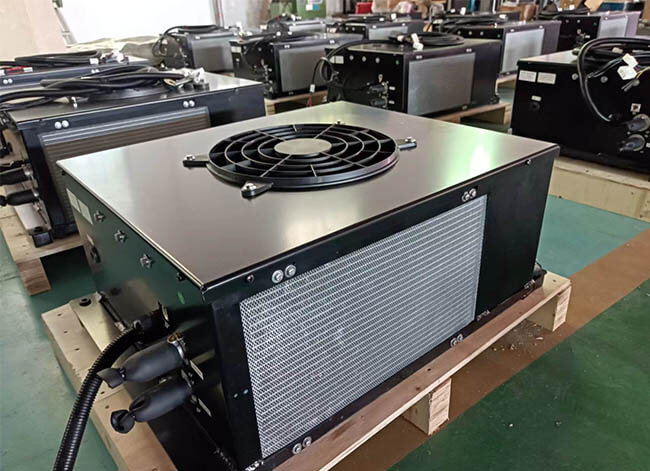
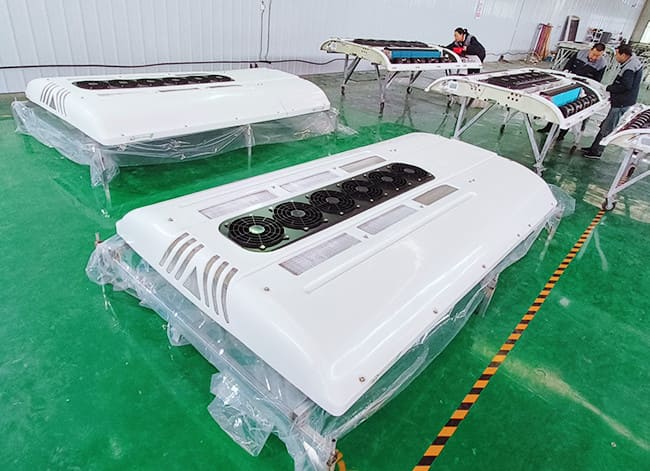
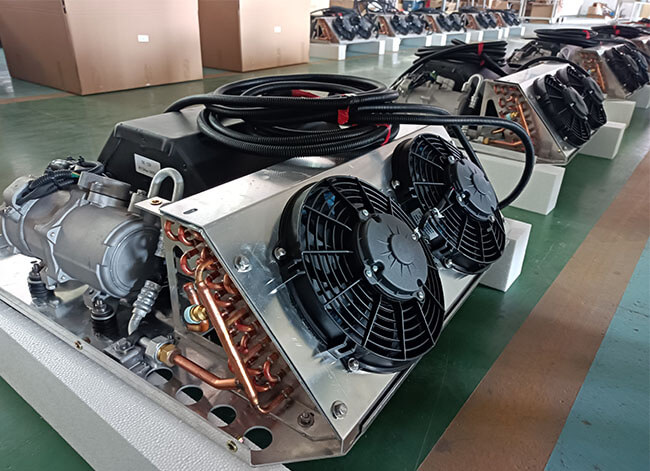
2. Active Cooling: This method actively intervenes in the heat transfer process by introducing external power devices, including forced air cooling, liquid cooling circulation systems, heat pipes/vapor chambers, and phase-change cooling technologies. These solutions offer strong heat dissipation capabilities and are suitable for high heat flux density scenarios, such as high-performance computing servers and EV battery thermal management systems. TKT specializes in the design, manufacturing, and sales of thermal management systems for electric vehicle batteries. Please feel free to contact us if you have any needs.
3. Material-Based Cooling: This method focuses on developing and applying new materials with ultra-high thermal conductivity, such as graphene, hexagonal boron nitride (h-BN), diamond composites, and metal matrix composites. By increasing the thermal conductivity of the materials, interfacial thermal resistance is reduced, achieving efficient heat conduction from the chip to the casing. في السنوات الأخيرة, thermal management materials news has been frequently reported, such as breakthroughs in nanostructured materials and two-dimensional materials.
4. Hybrid Thermal Management: As system complexity increases, hybrid thermal management solutions are gradually becoming mainstream. It combines passive and active technologies to create a multi-layer heat dissipation system for complex operating conditions.
Thermal management can be categorized into several types, including thermal management for electronic products, electric vehicles, data centers, aerospace, and industrial applications. Each type has its own specific technical requirements tailored to the characteristics of its application area. The continuous expansion of application scenarios is one of the significant changes in the field of thermal management in recent years.

Thermal management controls heat transfer. It directs heat from the source to a lower-temperature environment in an orderly manner. This process maintains system thermal equilibrium. Its basic principles are based on the three fundamental modes of heat transfer in thermodynamics: conduction, convection, and radiation.
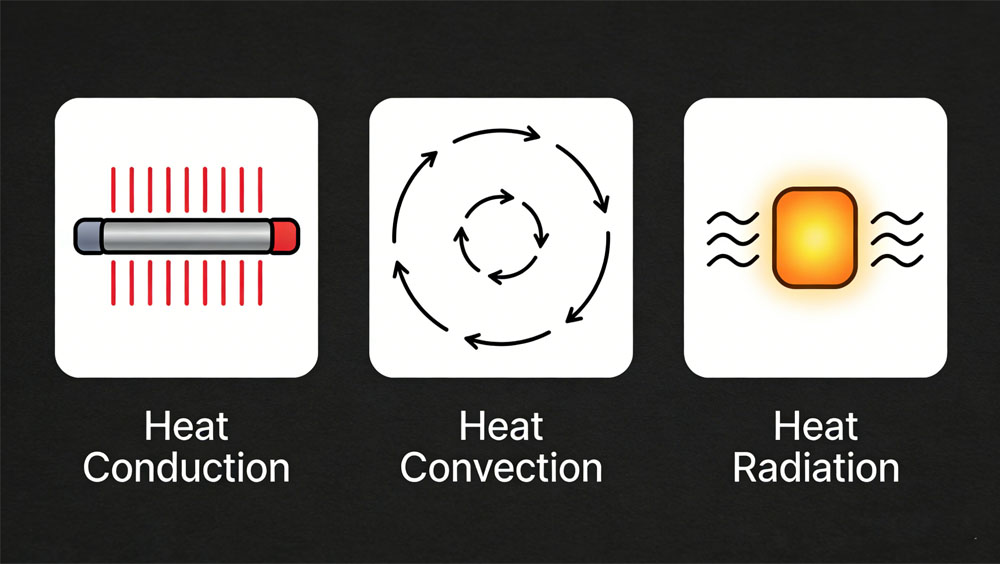
Heat is transferred through the vibration, collision, or movement of molecules, atoms, or electrons within a material. Thermal conductivity depends on the material's thermal conductivity, contact area, and temperature gradient. Improving the thermal conductivity of materials is a key direction for technological innovation in the field of thermal management.
Heat is transferred from one area to another through the flow of gas or liquid, and is divided into natural convection and forced convection. Natural convection relies on density differences caused by temperature variations to drive the flow, and is inexpensive and simple. Forced convection relies on external power sources such as fans and pumps to drive the flow, and is more efficient in heat transfer. Liquid cooling systems utilize liquids with high specific heat capacity to efficiently remove heat and have become standard equipment in heavy vehicles, data centers, and high-performance computing.
All objects with temperatures above absolute zero emit energy outward in the form of electromagnetic waves. Especially in high-temperature or vacuum environments, thermal radiation becomes the primary means of heat dissipation. Optimizing emissivity through surface coatings can significantly enhance radiative heat dissipation. This technology is widely used in aerospace and other extreme environments.
Modern thermal management systems no longer focus on optimizing a single heat transfer method. بدلاً من, they adopt a comprehensive design approach that considers thermal, الهيكلية, geometric, and electrical factors. By integrating simulation modeling with experimental validation, engineers achieve optimal designs. This reduces overall thermal resistance and improves system reliability and energy efficiency.
With technological advancements, thermal management has permeated almost all fields involving energy conversion and electronic operation, and its application scope continues to expand. This continued expansion of application scenarios is one of the significant changes in global thermal management news in 2025. The main application industries and scenarios are as follows:
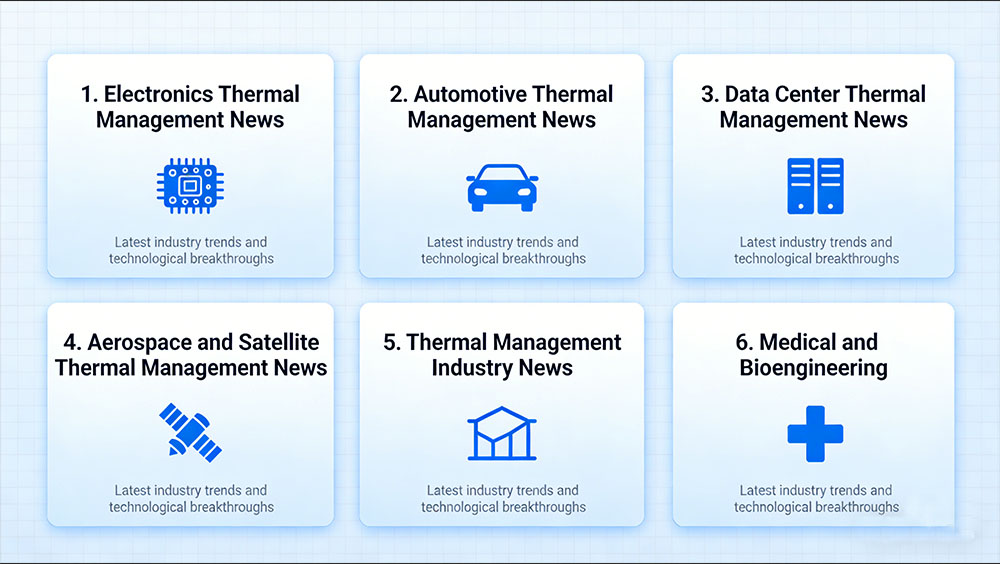
This is a core application area of thermal management, including mobile phones, laptops, أجهزة لوحية, and wearable devices. It also includes industrial electronic products such as semiconductors, chips, and communication base stations. As chip manufacturing processes move into the nanometer scale, heat generation per unit area increases dramatically. Under these conditions, thermal management directly determines equipment performance and service life. Thermal management has become one of the key factors restricting the performance improvement of electronic products.
This is the fastest-growing application area of thermal management in recent years. It covers EV battery systems, motors, electronic control units, and air conditioning systems. Precise EV thermal management systems enhance battery safety and extend service life. They also improve motor efficiency. فضلاً عن ذلك, they ensure stable vehicle operation under extreme conditions..
With the explosive growth of AI computing power and the rapid development of cloud computing, the heat generated by server clusters has increased dramatically. Thermal management is crucial for ensuring the stable operation of data centers, reducing energy consumption, and extending server lifespan. The large-scale application of liquid cooling technology in data centers is one of the most significant thermal management data center news stories in 2025.
Spacecraft, satellites, aircraft, and other equipment operate in extreme environments. They require thermal management technologies to control the temperature of critical components. This ensures system reliability. Common technologies include high-temperature heat pipes and infrared radiators.
This includes the thermal management needs of industrial equipment, new energy power generation equipment, and energy storage systems. Efficient thermal management can improve equipment efficiency, reduce energy consumption, and meet carbon neutrality goals. Especially in BESS thermal management, preventing thermal runaway has become a top priority in safety design.
Equipment such as MRI machines, laser therapy devices, and in vitro diagnostic equipment also require precise temperature control to ensure operational stability and detection accuracy.
Laird Performance Materials announced that its AI-optimized thermal management system has been successfully applied to the power equipment of new energy vehicles. This system not only achieves unprecedented heat dissipation efficiency and system integration, but also shortens the development cycle by 40% compared to traditional methods. معًا, intelligent operation control technology has also become widespread. This thermal management system integrates sensors and controllers, enabling it to dynamically adjust cooling parameters based on real-time temperature changes of components, achieving ultimate energy efficiency optimization.
Immersion liquid cooling technology has achieved large-scale application in commercial data centers. Faced with AI chips with heat flux densities exceeding 1000W, traditional air cooling technology can no longer meet the demands. Companies such as Vertiv Holdings have significantly expanded their liquid cooling product lines. They have applied immersion cooling solutions to server clusters for major cloud providers such as Google and AWS. مقارنة مع تبريد الهواء, these solutions reduce data center energy consumption by 25%–30%.
FAW Group launched an immersion battery cooling solution for heavy-duty trucks, solving the heat dissipation problem of high-power batteries during fast charging and improving battery safety by 50%.
Breakthroughs have been achieved in both cold plate and spray liquid cooling technologies. Cold plate cooling, due to its high technological maturity and low modification cost, has become the mainstream application. أكثر من 50% of data centers newly built by Chinese operators since 2025 have adopted this liquid cooling technology.
Graphene and carbon nanotube materials have made breakthrough progress in industrial applications. في 2025, several companies introduced graphene-based thermal interface materials. These materials offer thermal conductivity three to five times higher than that of conventional products. نتيجة ل, they reduce interfacial thermal resistance and significantly improve heat transfer efficiency. This material innovation has been widely applied in consumer electronics and industrial electronics, driving the miniaturization and high performance of devices.
Breakthrough in 3D Conformal Heat Pipe Technology. This technology allows for arbitrary adjustment of the heat transfer shape in three-dimensional space according to the configuration of the target electronic device, breaking through the limitations of traditional assembly space. Utilizing reverse engineering, micro/nano manufacturing, and data-driven 3D thermal packaging technology, it achieves deformation in four degrees of freedom: normal bending, radial bending, torsion, and lateral adjustment. It not only serves a heat dissipation function but also acts as an internal support component for electronic devices, achieving a synergistic effect of heat dissipation and support.
A Stanford University team announced a revolutionary breakthrough in chip heat dissipation. They invented a low-temperature polycrystalline diamond thin-film technology, achieving for the first time the direct growth of highly thermally conductive diamond coatings on gallium nitride and CMOS chips at temperatures below 400°C. Since diamond's thermal conductivity is six times that of copper and it is an electrical insulator, this technology can rapidly dissipate heat from internal "hot spots" within the chip.
A research team led by Song Bai at Peking University published in Nature Electronics, demonstrating an embedded three-layer microfluidic architecture that achieves a heat dissipation capacity of up to 3000 W/cm². This figure far exceeds the current limit of 2000 W/cm², while the required pump power is only 0.9 W/cm², resulting in a performance coefficient of 13000.
To address the high power density of AI chips, Yang Xiaoping’s team at Xi’an Jiaotong University proposed a “large-area vapor chamber with a large-particle-size sintered core” design. Their copper vapor chamber has a projected area of 40,000 mm². It achieves a maximum heat dissipation of 1100 W in a 40°C coolant environment and reduces thermal resistance by 35.4%. This provides an efficient phase-change cooling solution for high-power electronic devices.
At the Supercomputing Conference, Delta Electronics showcased its complete liquid cooling solution from chip to system. For next-generation AI GPUs, Delta launched a cold plate with a heat dissipation capacity of up to 6200W, and a 2MW rack-mount CDU compliant with OCP standards. Its innovative microchannel cover design significantly improves the heat dissipation efficiency for AI chips by increasing the heat exchange area by 20%.
Graphene Composites Ltd. announced that its advanced thermal management technology has been granted a US patent. This technology can more than double the efficiency of existing cooling systems, making it particularly suitable for data center cooling systems. This highly efficient and energy-saving heat dissipation solution is expected to reduce cooling energy consumption by approximately 30%.
A British materials science company announced that its graphene-ceramic composite thermal interface material has entered mass production. The material achieves a thermal conductivity of 1200 ث / م · ك. This is more than 30% higher than that of traditional materials.
Research institutes of the Chinese Academy of Sciences, in collaboration with industry partners, have developed a microchannel liquid metal cooling system based on low-melting-point alloys. The system delivers a heat dissipation capacity of over 500 W/cm² on a chip surface smaller than 1 cm². It has been successfully applied to a next-generation exascale prototype at the National Supercomputing Center.
NVIDIA has integrated a machine learning-based dynamic thermal prediction model into its latest Hopper architecture GPUs. This model can monitor load changes in real time and adjust fan speeds and power allocation strategies in advance, تحقيق "predictive cooling." Overall energy consumption is reduced by up to 18%, while extending device lifespan.
A Japanese company launched an ultra-thin vapor chamber only 0.2mm thick, suitable for thin and light mobile devices. A US startup used 3D printing technology to create a biomimetic microstructure heatsink, mimicking the veins of a leaf, improving heat dissipation efficiency by more than 25%.
Microsoft announced the successful validation of its "microchannel on the back of the chip" technology in its labs. Traditional heat dissipation requires multiple layers of heat transfer through thermal paste and cold plates, while this breakthrough directly etches micron-level trenches on the back of the silicon wafer. Coolant flows directly inside the chip, improving heat transfer efficiency by 3 times and reducing GPU core temperature rise by 65%.
Coherent Corp. released its patented diamond-loaded silicon carbide composite material. This new material has a thermal conductivity exceeding 800 W/m-K, more than twice that of pure copper. More importantly, its coefficient of thermal expansion (CTE) closely matches that of the silicon wafer. This compatibility reduces thermal stress. نتيجة ل, it prevents high-power chips from cracking under repeated thermal cycling.
1. According to industry statistics, the global thermal management market will exceed $200 billion in 2025, representing a year-on-year growth of 18%. Data centers and new energy vehicles are the main drivers of growth, accounting for over 60% of the total market size. This rapid growth has attracted significant investment. It is accelerating research, تطوير, and industrialization in thermal management technologies. نتيجة ل, it has become a key indicator for the sector in 2025.
2. According to a study released by IDTechEx in January 2026, the BESS thermal management and fire protection market will exceed $25 billion by 2036. في أثناء, the adoption of cell-to-pack designs and silicon carbide power electronics is accelerating. نتيجة ل, immersion cooling and direct oil-cooled motors are emerging as key trends in the EV sector.
3. Starting in July 2026, mandatory regulations for newly built data centers (>1MW) will be officially implemented in Germany and several other EU countries. These regulations require data centers to recover at least 15% of their waste heat for municipal heating. This policy is forcing data centers to shift from traditional "cooling units plus air conditioning" ل "high-temperature water cooling" systems, because only return water above 60°C has commercial heating value.
4. في 2025, the International Electrotechnical Commission (IEC) released a revised version of IEC 62768-2: Thermal Management Materials—Test Methods—Part 2. For the first time, the standard introduced a long-term aging test under dynamic pressure conditions. This provides a unified basis for assessing the reliability of thermal interface materials.
1. The 42nd SEMI-THERM
Dates: March 9-12, 2026 | موقع: سان خوسيه, الولايات المتحدة الأمريكية
Theme: An international forum focusing on thermal management and characterization of electronic components and systems.
2. Thermal Asia 2026
Dates: March 18-20, 2026 | موقع: Shenzhen Convention and Exhibition Center, الصين
Theme: High thermal conductivity materials, liquid cooling solutions, AI thermal management technology, new energy thermal control
Highlights: A dedicated "Future Heat Dissipation Lab" zone showcasing graphene, liquid metal, and intelligent thermal control prototype systems.
3. ATC Shanghai International New Energy Vehicle Thermal Management Technology Exhibition 2026
Dates: June 3-5, 2026 | موقع: Shanghai New International Expo Centre.
Focus: The entire thermal management industry chain, covering EV thermal management news, data center thermal management, energy storage thermal management, and other fields.
4. International Summit on Thermal Technology for Electronics (ESTEC 2026)
Date: June 10-12, 2026 | موقع: Munich Exhibition Center, ألمانيا
Focus: Chiplet packaging thermal management, 3D IC stacking thermal challenges, carbon nanotube applications in TIM, advanced simulation tools
5. The 7th International Symposium on Thermodynamics (ISTFD) 2026
Date: July 10-13, 2026 | موقع: Xi'an, الصين
Theme: "Thermodynamic Innovation for a Sustainable and Intelligent Future"
Highlights: Covering cutting-edge topics such as AI-driven thermal science, micro/nano-scale transport, and battery thermal management news.
6. Global Thermal Forum 2026
Date: September 23-25, 2026 | موقع: سان خوسيه, California, الولايات المتحدة الأمريكية
Core Topics: Electric vehicle battery thermal safety, photovoltaic inverter thermal design, temperature control challenges in hydrogen storage and transportation, offshore wind power thermal management.
Major technological breakthroughs and industry transformations are expected by 2025. Against this backdrop, global thermal management will evolve into a system-level engineering discipline. It will integrate materials science, micro- and nano-manufacturing, artificial intelligence, and sustainable development concepts. Its form and structure will also undergo profound changes, which will be a key focus of future thermal management news.
نظام الإدارة الحرارية للبطارية TKT (This video was created using AI manufacturing technology; please excuse any imperfections in the animation details.)
1. Integration and Miniaturization Upgrades: Thermal management modules will be more deeply embedded in the chip packaging process, integrated with interposers, TSVs, and other structures to form a new "chip-as-heatsink" architecture. Micro/nano-scale heat pipes, thin-film thermoelectric coolers, and other devices will be widely used in wearable devices and AR/VR glasses.
2. Deepening Intelligent Upgrades: Dynamic thermal management systems based on AI and multi-sensor fusion will gradually replace traditional fixed-strategy control, achieving a closed loop of "perception-decision-execution." Devices can autonomously adjust their heat dissipation modes. They respond to factors such as usage scenarios, درجة الحرارة المحيطة, and user behavior. This enables an optimal balance between performance and power consumption.
3. Deepening Low-Carbon and Sustainable Development: Environmentally friendly cooling media, such as CO₂ and propane, will gradually replace high-GWP refrigerants. معًا, projects utilizing waste heat recovery from data centers for district heating and agricultural greenhouses will increase, promoting the "resource utilization of waste heat."
4. Emerging scenarios are driving new innovation. As technologies such as the low-altitude economy, quantum computing, and wearable devices continue to develop, new thermal management demands will arise.
5. Interdisciplinary Technological Collaboration: The integration of thermal management technology with new materials, new structures, and new energy technologies will become closer.
Breakthroughs in global thermal management technology by 2025 provide solid support for improved electronic device performance and the new energy revolution. From microscopic chips to macroscopic urban infrastructure, from the Earth's surface to deep space, thermal management is reshaping how we interact with energy. فى المستقبل, materials science, artificial intelligence, and advanced manufacturing will continue to converge. Thermal management will enter a new stage of development. It will feature higher efficiency, lower energy consumption, greater adaptability, and increased intelligence.
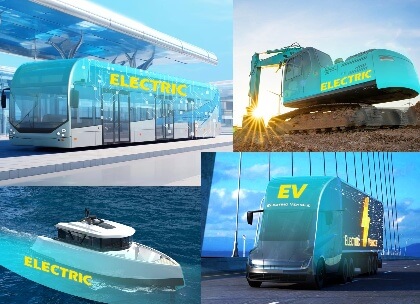
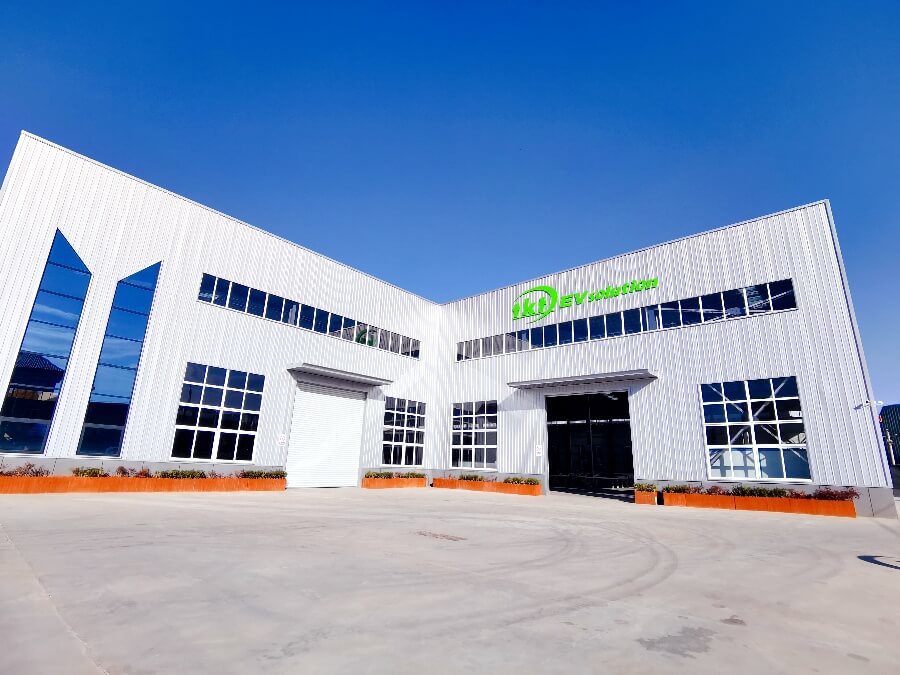
TKT هي شركة عالمية رائدة في مجال حلول الإدارة الحرارية للبطاريات, with products designed for electric buses, الشاحنات الكهربائية, المعدات الثقيلة الكهربائية, والقوارب الكهربائية. We are a designated supplier for many globally renowned automakers, بما في ذلك BYD وتاتا موتورز. Click here to browse our specific products.
مزيد من القراءة: الإدارة الحرارية لحزمة البطارية, ما هو التبريد الغمر للبطارية, نظام الإدارة الحرارية للبطارية للسيارات الكهربائية وعمر البطارية.
فيسبوك: https://www.facebook.com/TKTHVAC/
ينكدين: https://www.linkedin.com/company/tkt-hvac
يوتيوب: https://www.youtube.com/@TKTHVAC
لا أحد