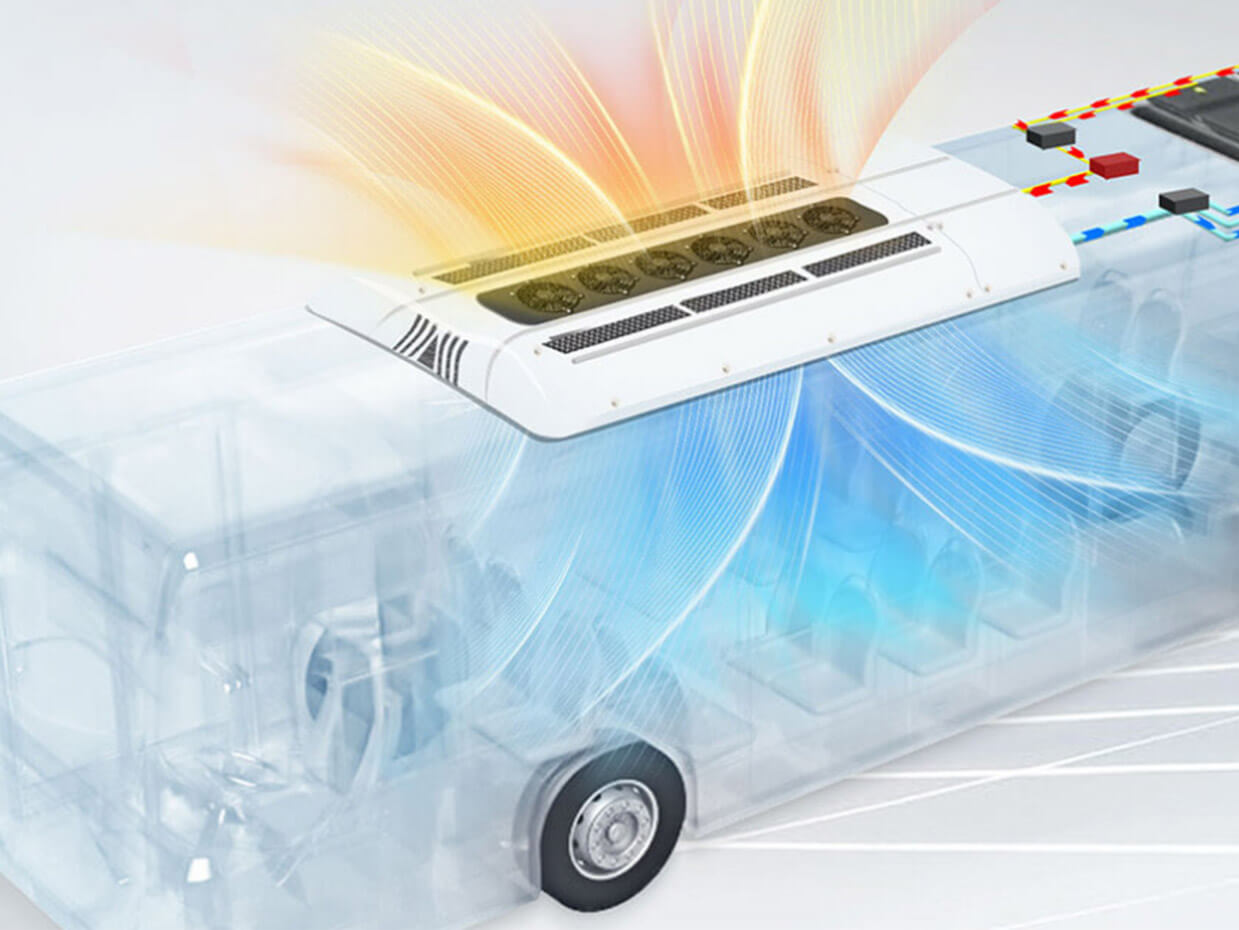
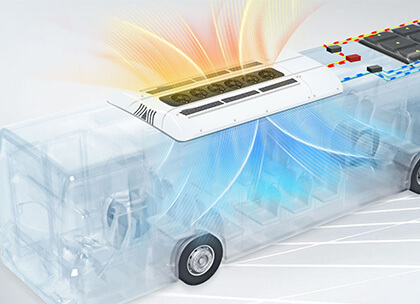
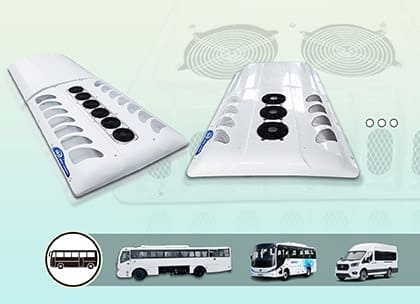
Discover how to choose the right AC unit for a bus with insights on AC functionality, best models, sizing, and power solutions to ensure optimal comfort and efficiency. Cooling a bus isn't something that can be solved by a single air conditioner. In reality, effective cooling depends on three key factors: insulation, electricity, and a suitable air conditioning system. These correspond to how well the cool air is retained, how long it lasts, and how effectively it cools.
A bus without insulation is essentially without cooling. Because the steel structure allows intense external heat to enter the interior directly, it transfers heat into the bus. Engineers call this the “thermal bridging effect.” The thermal bridging effect occurs when the thermal conductivity of a building's outer structure is significantly higher than that of the surrounding area. This is because highly thermally conductive materials such as reinforced concrete beams, columns, or metal components penetrate the insulation layer, causing concentrated and rapid heat loss. 그러므로, before purchasing AC unit for bus, this heat transfer must be prevented. Effective insulation can reduce the cooling load by up to 20%.
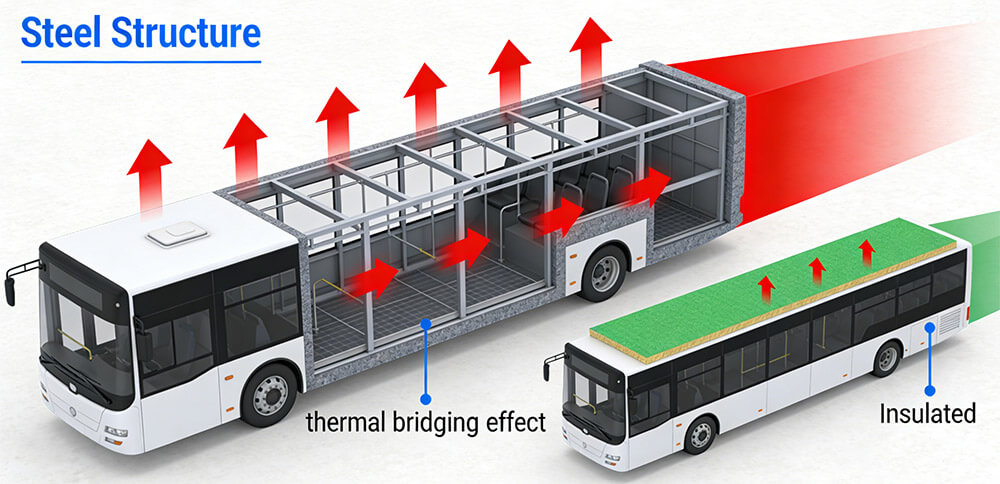
1. Spray-applied foam insulation: Technicians use a two-component polyurethane (PU) compound and apply it with high-pressure spraying to foam the material on-site. This process fills the gaps between the vehicle body frame and the inner and outer skins, forming a seamless, airtight layer.
2. Sheet-filled insulation: Molded sheets are filled into the vehicle body layers. Common materials include extruded polystyrene (XPS), rigid polyurethane foam (PU), and glass wool.
3. Window insulation: heat-insulating glass, and window film.
4. AC unit for bus duct insulation: Engineers insulate air conditioning ducts using materials such as glass wool, PU sheets, and EPS foam. They typically use a thickness of 20–50 mm and wrap the ducts with an aluminum foil moisture barrier to prevent cooling loss and condensation.
5. Sealing and gap treatment: Strengthening the sealing of doors, windows, and seams, using EPDM sealing strips and silicone sealant to reduce the penetration of hot and cold air and improve heat insulation efficiency.
When you achieve proper heat insulation, your air conditioner will not consume excessive battery power to combat the heat.
Traditional fuel-powered buses and electric buses take completely different approaches when choosing air conditioning.
Engine-driven buses typically can only choose traditional fuel-powered bus air conditioning. A belt directly connects to the engine crankshaft. This conventional choice is simple in structure, low in cost, and easy to maintain. It is the most cost-effective option. 하지만, this option may have some minor issues. 그게, during cooling, there is a power loss of approximately 10-20%. The engine power needs to be comprehensively considered.
Assessing Remaining Engine Power
Core Formula: Available Power = Engine Rated Power × 0.8 - Vehicle Driving Resistance Power - Power from Other Accessories (Steering, Braking, Air Compressor, 등.)
Bus Driving Resistance Power: Calculated under full load and maximum speed, city buses are approximately 30-50kW, and long-distance buses are approximately 50-80kW.
Calculating the power requirements of the air conditioning system
A typical 12-meter bus air conditioner: cooling capacity approximately 30-40kW, corresponding to a compressor power of approximately 8-12kW (including cooling fans and other accessories).
공식: Air conditioning power = cooling capacity ÷ energy efficiency ratio (EER). The EER for bus air conditioners is typically 2.8-3.5.
This option can be used if the engine power is insufficient. A small-displacement auxiliary engine is added to the bus, dedicated to running the air conditioning. The advantages are strong cooling capacity, no impact on the main engine's power, and the ability to operate even when the bus is stopped, ensuring the air conditioning won't stop working due to parking. The main disadvantage is the very high price.
This option is only suitable for very small buses, or for cooling only the driver. The cooling effect is limited, and it's typically used in small spaces like truck cabs. This option is inexpensive, but for regular buses, it's completely ineffective at cooling.
| Bus Type | Minimum operating mileage | Recommended Battery Capacity | Battery Life with Air Conditioning On |
| 10-12 meter city buses | Daily distance: 200-300킬로미터 | 300-400KWH | 250-350킬로미터 |
| 8-10 meter buses | Daytime distance: 100-150킬로미터 | 200-250KWH | 150-200킬로미터 |
| Long-distance passenger buses | Daytime distance: 300-500킬로미터 | 400-600KWH | 300-450킬로미터 |
| Scenic area/park shuttle buses | Daytime distance: ≤100km | 100-150KWH | 80-120킬로미터 |

To determine the required size of your AC unit for bus, you need to understand the BTU value. BTU stands for British Thermal Unit, an imperial unit used in the refrigeration, air conditioning, and heating, 통풍, 그리고 에어컨 (공조) industry to measure heat/cooling capacity.
Because bus structures are typically metal, they heat up more easily in sunlight than typical homes. You need greater cooling capacity to combat the high temperatures. If you choose an underpowered bus air conditioning unit to save money, it will struggle to cope with the heat and run continuously until the motor burns out.
To determine how many BTUs of cooling capacity your bus needs, you must directly consider the vehicle's overall length and the driving environment. As a reliable benchmark for average summer weather, most manufacturers rely on the following targets:
1. 을 위한 Minibuses (under 6 미터): Below 47,000 BTU
2. 을 위한 Medium buses (6-10 미터): 54,000 에게 88,000 BTU
3. 을 위한 Large buses (~ 위에 10 미터): 110,000 BTU
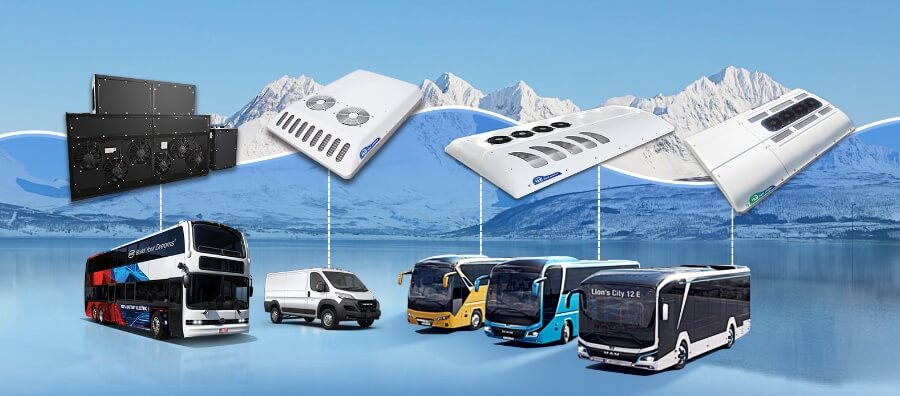
If the climate is tropical, then the standard needs to be raised by one level. If the region is relatively cool, the standard can be lowered by one level.
게다가, some manufacturers also use the number of seats as a reference, which is also a valid criterion. This is because the number of seats in a vehicle represents the basic number of passengers. Each supplier has its own standards; you can consult bus air conditioning manufacturers with your vehicle data. Our sales team will provide the most suitable solution based on your specific circumstances.
bus cooling requires the coordinated operation of various bus components in addition to the air conditioning system to achieve optimal results. The three components mentioned above are the most crucial. Please pay special attention to these aspects to ensure a comfortable travel experience for passengers.
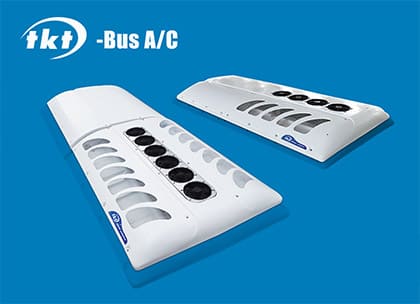
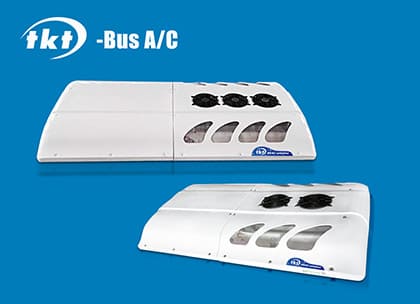
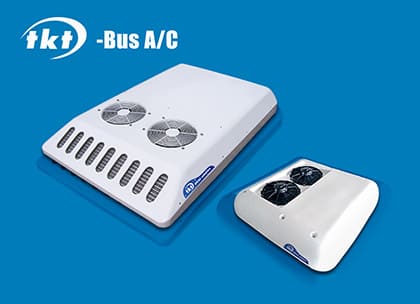
TKT is an AC unit for bus manufacturer from China. Our experience dates back to 1998. We have customized products for renowned bus manufacturers such as TATA and Olectra. With strong technical capabilities and experienced staff, we guarantee reliable product quality.
추가 독서: 버스 에어컨 냉매 비교, 24v 버스 에어컨: 작은 전통적인 버스를위한 새로운 선택, 버스 에어컨 유지 보수 매뉴얼
페이스북: https://www.facebook.com/TKTHVAC/
링크드인: https://www.linkedin.com/company/tkt-hvac
유튜브: https://www.youtube.com/@TKTHVAC
없음